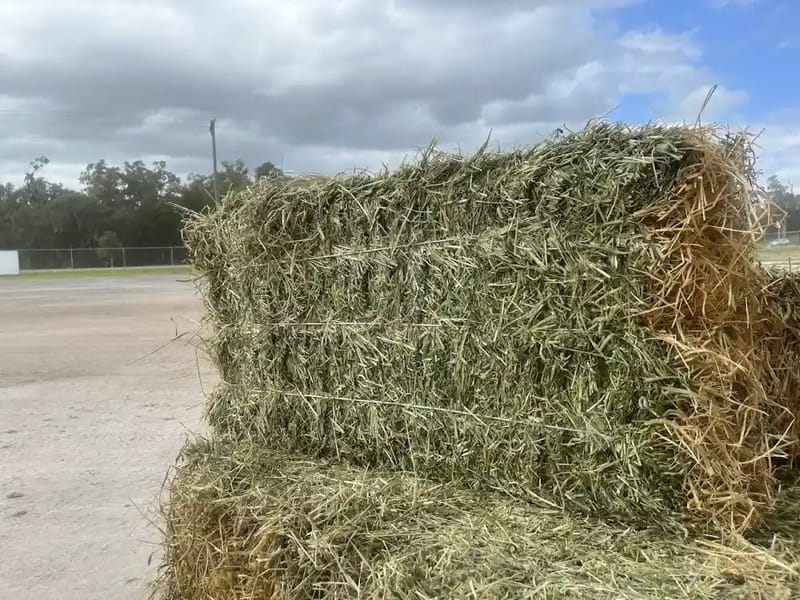
Coastal Hay for Horses in Florida
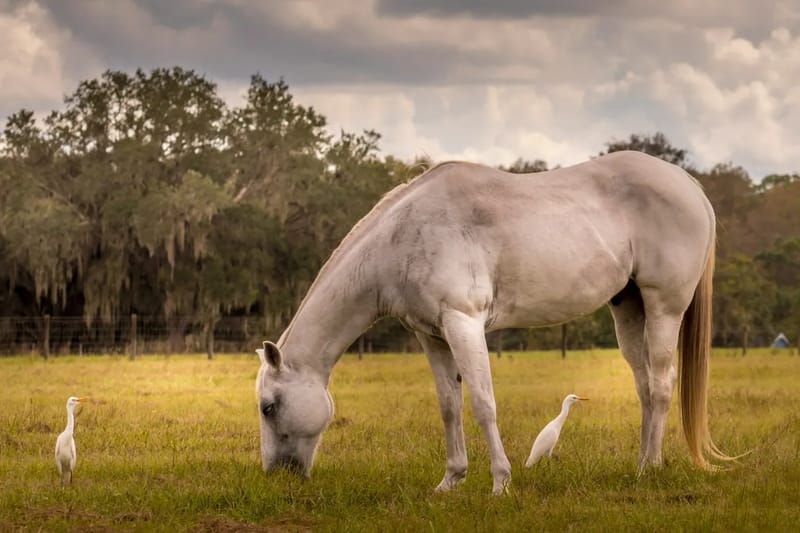
Coastal bermuda is Florida's go-to horse hay. Here's how to buy it smart, lower the colic risk, and know when to upgrade to lab-tested western hay.
Loading...
From Our Blog
Expert hay tips, horse nutrition guides, and news from Farmers Direct Hay and Feed.

Coastal bermuda is Florida's go-to horse hay. Here's how to buy it smart, lower the colic risk, and know when to upgrade to lab-tested western hay.

Teff grass hay is the lowest-sugar forage we stock at Farmers Direct in Williston, FL. Here is who it fits, why the low-sugar profile matters, and why we keep lab results on file for the current lot.

Alfalfa hay for horses carries more myth than most forages. Here is what it actually does nutritionally, who it fits, how much to feed, and how it compares to second cutting and orchard-alfalfa blends.

What the best hay for goats really comes down to: leafy over stemmy, grass for maintenance, legumes like alfalfa and peanut for growth and milk.

A bale is not a fixed unit. Here is what small squares, three-string bales, round bales, and big squares actually weigh, and why you should always ask the pounds before you buy.

An Ocala horse owner's guide to buying hay: how to choose a supplier you can count on, why consistency matters in horse country, what to ask before you order, and how pickup and delivery work from nearby Williston.

Searching for timothy hay near you in Central Florida? A Williston grower on how to judge first cut versus second cut, why the cutting interval controls sugar, what good timothy looks like in the bale, and what it costs delivered near Ocala and Gainesville.

What a bale of hay actually costs in Central Florida, why freight makes Western hay cost more here, and why the cheapest bale on the lot usually costs you more once your horse leaves half of it in the stall.

The belief that alfalfa makes horses hot is one of the most repeated ideas in the horse world, and it does not hold up. A Williston FL grower on where the myth comes from, what alfalfa actually provides, and which horses it fits.

A fifth-generation farmer's field guide to telling good horse hay from bad: what to look for in color, stem, and leaf, how to spot moldy or dusty hay, and why Florida storage is where good hay goes wrong.

Comparing Nevada timothy hay vs Canadian hay for your Central Florida barn? A direct-source supplier's guide to why western hay is consistent, what Alberta compressed bales deliver, and where Florida peanut hay fits in. Equi-Analytical lab data on every load.

Buying hay in Marion, Levy, Alachua, and Citrus counties. The five questions every barn manager should ask any supplier, zone-by-zone delivery pricing, lab-tested forage, and how the order actually arrives at your barn.

How to keep horse hay fresh in Florida. The 4-inch pallet rule, the 60 percent humidity ceiling, and how to know when a stack is heating up.

Calculate exactly how much hay your horse needs daily and monthly. Includes bale counts by horse size and workload, monthly cost estimates, and budget tips.

Complete guide to spring pasture transition, hay selection, and metabolic horse feeding for Central Florida horse owners. Includes a side-by-side nutritional comparison of every hay type we carry.

A comprehensive guide to feeding horses with EMS, Cushing's, and insulin resistance. Covers the 10% NSC rule, best hay choices, soaking protocols, and pasture management.

Learn the real differences between 1st, 2nd, and 3rd cut hay. Understand how cutting number affects nutrition, texture, and price, and which is right for your horse.

A complete guide to timothy, alfalfa, orchard grass, teff, and peanut hay. Learn how to match the right hay to your horse's age, workload, and health needs.
Farmers Direct Hay and Feed LLC serves Williston, Ocala, Gainesville, and North Central Florida. Visit us at 21091 NE US Hwy 27, Williston, FL 32696 or call (352) 528-1255.