Feeding Guide for Horses with Metabolic Issues
On this page
- Understanding Equine Metabolic Conditions
- The Laminitis Connection
- The 10 Percent NSC Rule
- Best Hay Choices for Metabolic Horses
- How to Soak Hay to Reduce Sugar
- Feeding Rates and Strategies for Metabolic Horses
- Pasture Management for Metabolic Horses
- Working with Your Vet: Testing and Monitoring
- Frequently Asked Questions
IMPORTANT DISCLAIMER: This article is for educational purposes only and is not a substitute for veterinary advice. Equine metabolic conditions require professional veterinary diagnosis, treatment, and ongoing monitoring. Always work with your veterinarian to develop a feeding plan for a horse with metabolic issues. The information here is meant to help you understand the dietary component of managing these conditions, not to replace veterinary care.
If a customer walks into our store in Williston, FL and tells us their horse has metabolic issues, we know exactly how serious that conversation is. Metabolic conditions in horses are increasingly common, and they are the leading cause of laminitis. The good news is that early detection and proper diet management can prevent the most devastating outcomes. The dietary component, especially hay selection, is something we can help with.
We have been in the horse hay business since 2012, and we have worked with countless horse owners across Ocala, Gainesville, and Central Florida who are managing metabolic horses. This guide covers what you need to know about hay and diet for horses with EMS, Cushing's disease, and insulin resistance.
Understanding Equine Metabolic Conditions
These conditions are more common than many horse owners realize, and understanding the basics helps you make better feeding decisions.
Equine Metabolic Syndrome (EMS)
EMS is a collection of risk factors that includes obesity, regional fat deposits (the "cresty neck" that many owners notice first), and insulin dysregulation. The central problem is insulin dysregulation: the horse's body overproduces insulin in response to sugars and starches in the diet. This chronic insulin elevation leads directly to increased laminitis risk.
EMS is most common in easy keepers, ponies, Morgans, Arabians, Paso Finos, and other metabolically efficient breeds. If your horse gains weight easily and carries fat in unusual places (along the crest of the neck, above the eyes, around the sheath or mammary glands), talk to your vet about testing for EMS. The European College of Equine Internal Medicine (ECEIM) has published consensus statements outlining the diagnostic criteria and management protocols for this condition.
PPID (Cushing's Disease)
Pituitary Pars Intermedia Dysfunction, commonly called Cushing's disease, is a hormonal disorder of the pituitary gland. It is most common in horses over 15 years old. The telltale signs include a long, curly coat that does not shed properly in spring, muscle wasting, fat redistribution, and increased drinking and urination.
Here is an important detail: approximately 30 percent of horses with PPID also develop insulin dysregulation. That means nearly one in three Cushing's horses faces the same laminitis risk as an EMS horse. PPID is typically managed with pergolide (Prascend) alongside dietary changes. Horses with PPID that do not have insulin dysregulation may not need as strict a low-NSC diet, but regular monitoring is essential because the condition can change over time.
Insulin Resistance (IR)
Insulin resistance often accompanies EMS and sometimes PPID. When a horse is insulin resistant, the cells do not respond properly to insulin, resulting in chronically elevated insulin levels in the blood. High insulin is directly linked to laminitis through disruption of the blood supply to the laminae in the hoof.
The Laminitis Connection
Laminitis, also called founder, is the most dangerous outcome of unmanaged metabolic disease, and it is the reason we take these conditions so seriously. When a metabolic horse consumes excess sugar and starch, it triggers insulin spikes. Over time (or sometimes acutely), this can lead to inflammation and structural failure in the laminae, the tissue that connects the coffin bone to the hoof wall. In severe cases, the coffin bone can rotate within the hoof, causing permanent damage that may be career-ending or life-threatening.
Prevention through diet is far better than treating an active laminitic episode. Pasture-associated laminitis results from excess consumption of grass high in nonstructural carbohydrates (NSC), and hay-based laminitis risk comes from feeding hay with NSC levels that are too high for the individual horse.
The 10 Percent NSC Rule
What Is NSC and Why Does It Matter?
NSC stands for Non-Structural Carbohydrates, and it represents the sugars plus starches in hay. More specifically, the measurement that matters for metabolic horses is ESC (Ethanol Soluble Carbohydrates) plus Starch. You may also see WSC (Water Soluble Carbohydrates) on hay analyses. WSC includes fructans, while ESC excludes them. For metabolic horses, ESC plus Starch is the critical number because these are the carbohydrates that directly trigger the insulin response.
The Veterinary Consensus
The target for metabolic horses is ESC plus Starch under 10 percent of hay dry matter. This threshold is consistent across the ECEIM consensus statement, UC Davis veterinary recommendations, the Merck Veterinary Manual, and most equine nutritionists. It is not an arbitrary number. Research shows that keeping dietary NSC below this level helps maintain blood insulin concentrations at or below 50 mcIU/mL when measured two hours after feeding, which indicates acceptable diet management.
You Cannot Tell NSC by Looking at Hay
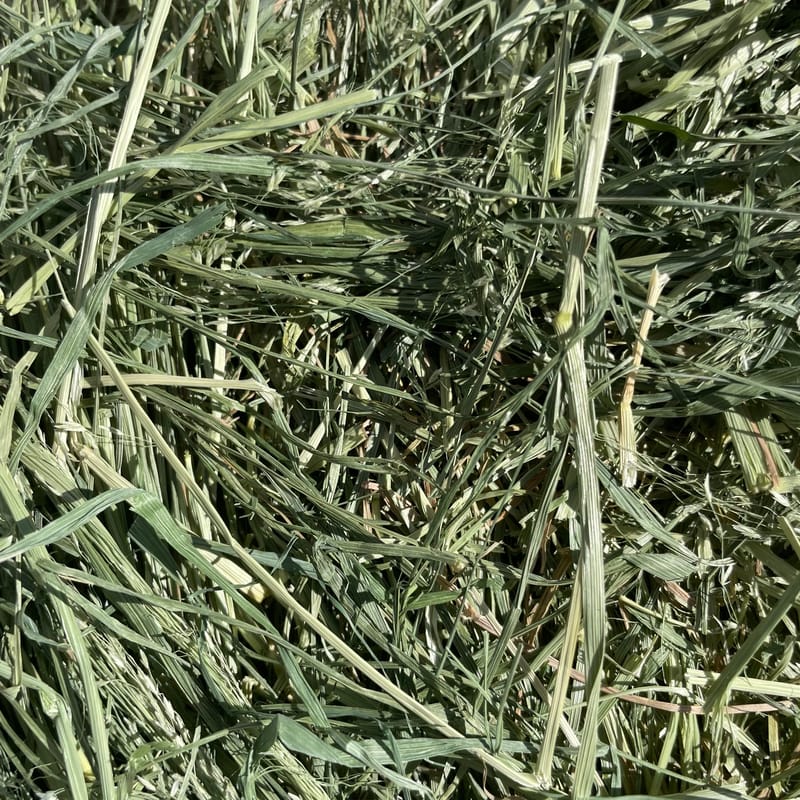
This is one of the most important points in this entire article. Color, smell, texture, and cutting number do not reliably predict NSC content. A bright green bale of timothy can test at 8 percent NSC or 16 percent NSC, and you cannot tell the difference by appearance alone.
The only way to know is laboratory analysis. Equi-Analytical Labs offers horse-specific testing starting at $24 for their Fast Track package. When you submit a sample, ask for ESC, starch, crude protein, ADF, NDF, and minerals. Test each new lot or load of hay, because NSC varies between batches even from the same field in the same season.
Best Hay Choices for Metabolic Horses
Teff Grass (Our Top Recommendation)
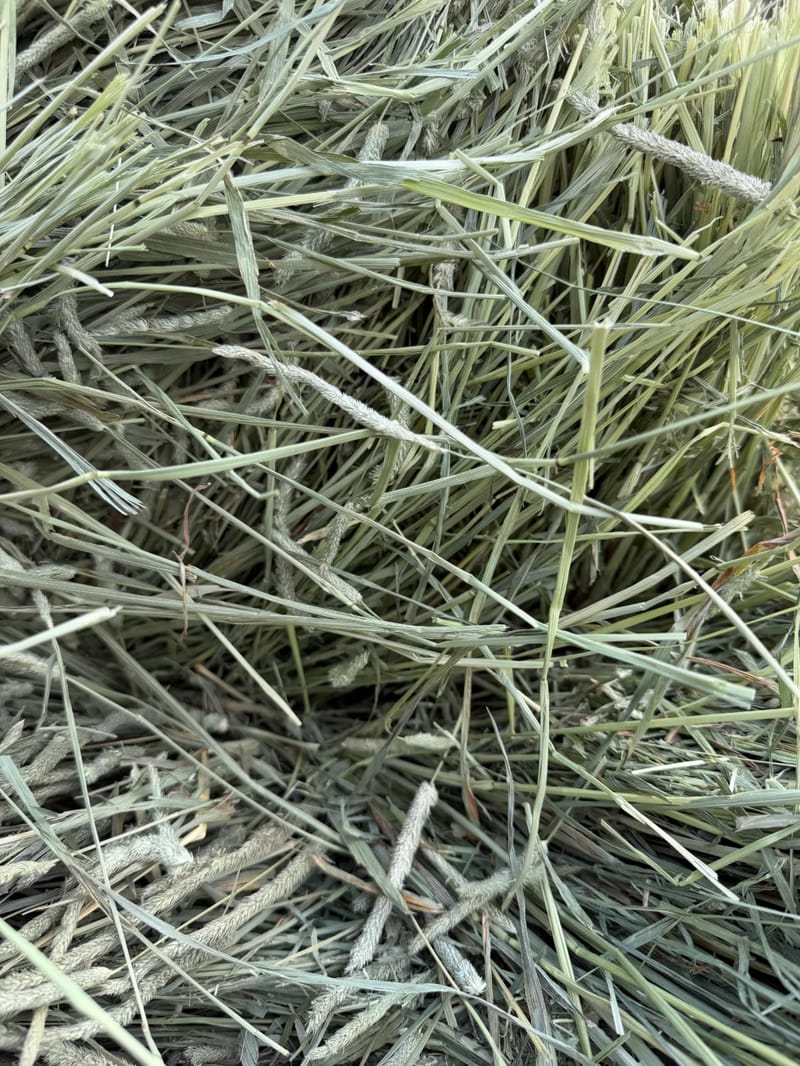
When customers ask us what hay we recommend for metabolic horses, teff grass is our first answer. Teff is a warm-season grass originally from Ethiopia, and it is naturally low in NSC, typically under 10 percent. The NSC ranges from about 5.4 percent at the boot stage to 8.4 percent at late maturity.
The reason teff works so well for metabolic horses goes beyond just the numbers. Because teff is a warm-season grass, it stores carbohydrates as starch rather than fructans. Fructans are a particular concern for metabolic horses because they are fermented in the hindgut and can trigger inflammatory responses. By avoiding fructans entirely, teff provides an additional margin of safety.
Protein is moderate at 11 to 13 percent, which is adequate for most horses at maintenance. We carry teff grass at $39.00 per 3-string bale. It is a hay we are confident recommending to owners managing metabolic conditions.
One caveat: even with teff, NSC can vary depending on harvest conditions. Testing is always recommended when you are feeding a metabolic horse, regardless of the hay type.
Timothy (1st Cut, Tested Low-NSC)
Timothy averages around 12 percent NSC, but the range is wide, from 7 to 18 percent. Some batches will test under 10 percent, making them safe for metabolic horses. First cut timothy tends to be higher in fiber, which is beneficial because the horse chews longer for fewer calories.
The key word here is "tested." You cannot assume any batch of timothy is safe for a metabolic horse without a lab analysis. We carry Nevada-grown Timothy 1st Cut at $39.50 per bale, and many of our customers managing metabolic horses feed it successfully after confirming the NSC levels.
Orchard Grass (If Tested)
Orchard grass has a similar NSC profile to timothy, averaging around 12 percent with a range of 7 to 18 percent. It must be tested before feeding to a metabolic horse. The higher palatability of orchard grass can be helpful if your horse is reluctant to eat, but palatability is not a reason to skip the lab work.
Hays to Limit or Avoid
Straight alfalfa: While alfalfa's NSC is actually moderate (around 11 percent), the higher calorie content can worsen obesity, which is one of the core problems in EMS. An overweight metabolic horse does not need the extra calories.
Rich 2nd and 3rd cut timothy: Later cuttings may have higher sugar levels, though this is not guaranteed. Test before feeding.
Any untested hay: If you do not know the NSC, you do not know what you are feeding. For a metabolic horse, that is a risk you should not take.
Cereal grain hays (oat hay, etc.): These are often very high in NSC and are generally not appropriate for metabolic horses.
How to Soak Hay to Reduce Sugar
The Soaking Protocol
Soaking hay in water before feeding can reduce NSC content. The protocol is straightforward: soak in cold water for 60 minutes, or warm water for 30 minutes. Research shows that soaking can reduce NSC by 20 to 40 percent. University of Minnesota research demonstrated reductions in as little as 15 minutes, though longer soaks are more effective.
For example, hay starting at 14 percent NSC can potentially drop below 10 percent after a one-hour cold soak. This can turn a borderline hay into a safe option for your metabolic horse.
Important Caveats About Soaking
Soaking also leaches beneficial minerals including potassium, magnesium, and phosphorus. If you soak hay regularly, you may need to supplement these minerals. Talk to your vet or equine nutritionist about a ration balancer.
Do not soak longer than 60 minutes. Extended soaking degrades nutritional value without further meaningful NSC reduction.
Feed soaked hay immediately. Wet hay grows mold rapidly, and this is an especially serious concern in Florida's heat. During summer in Central Florida, soaked hay can begin to ferment within hours. Do not soak hay in the morning and feed it in the evening.
Soaking does not guarantee the hay will be under 10 percent NSC. If the starting NSC is very high (above 14 to 15 percent), soaking may not reduce it enough. This is why starting with a naturally low-NSC hay like teff is preferable to relying on soaking alone.
When Soaking Is Not Enough
If your hay tests above 14 to 15 percent NSC, soaking alone likely will not bring it under the 10 percent threshold. The better approach is to start with naturally low-NSC hay (teff is the most consistent option) and soak as an extra precaution if needed.
Some owners use hay steamers, but it is important to understand that steamers primarily kill mold spores and bacteria. They do not significantly reduce sugar content. Steaming and soaking serve different purposes.
Feeding Rates and Strategies for Metabolic Horses
How Much to Feed
Start at 2 percent of your horse's ideal body weight per day (not their current weight, if overweight). If weight loss is needed, reduce to 1.5 percent of ideal body weight. After 30 days at 1.5 percent, you can further reduce to 1.25 percent if necessary, but only with veterinary guidance.
Never feed below 1 percent of body weight. Going below this threshold risks hyperlipemia and other serious metabolic complications. Restricting hay too aggressively can be as dangerous as feeding the wrong type.
Slow Feeders Are Essential
Use small-hole hay nets with 1 to 1.5 inch openings. Slow feeders extend eating time, mimic natural grazing behavior, and prevent the long fasting periods that can trigger stress-related metabolic episodes. If possible, divide the daily ration into four to six small meals spread throughout the day.
For metabolic horses, slow feeders are not optional. They are a core part of the management strategy.
What Else to Remove from the Diet
Grain, sweet feed, and commercial feeds high in NSC should be eliminated. Fruits, carrots, and sugary treats need to go as well. Molasses-based supplements are a hidden source of sugar that many owners overlook. Pasture access needs to be carefully managed (more on that below).
Replace concentrated feeds with a low-NSC ration balancer to meet vitamin and mineral needs without the sugar and starch.
Pasture Management for Metabolic Horses
Pasture grass NSC fluctuates dramatically throughout the day, and understanding this pattern is critical for metabolic horse management.
The lowest sugar levels in pasture occur in the early morning, before dawn through about 9 to 10 AM. The highest sugar levels occur during sunny afternoons, especially after a cold night followed by a warm day. Stressed grass (from drought, frost, or overgrazing) accumulates more sugar than healthy, actively growing grass.
If turnout is necessary, use a grazing muzzle to limit intake. But for horses with significant metabolic issues, dirt lots or dry lots are the safest option during high-risk periods. Many of our customers in the Ocala and Gainesville area use dry lot turnout for their metabolic horses and provide tested hay in slow feeders.
Working with Your Vet: Testing and Monitoring
Diagnosis of metabolic conditions requires blood work, including insulin, glucose, and ACTH testing (ACTH is specifically for Cushing's disease). Once diagnosed, monitoring should include postprandial insulin testing, which means measuring blood insulin two hours after a meal. The target is insulin below 50 mcIU/mL post-feeding.
Retest seasonally. Horses with PPID often worsen in the fall due to the natural seasonal rise in ACTH levels. Pergolide dosage for PPID horses is adjusted based on ACTH testing results.
This is not a "set it and forget it" situation. Metabolic conditions require ongoing veterinary partnership.
Frequently Asked Questions
My vet said my horse has Cushing's but isn't insulin resistant. Does he still need low-sugar hay?
Not necessarily to the same strict degree. PPID horses without insulin dysregulation may tolerate moderate-NSC hay. However, approximately 30 percent of PPID horses develop insulin dysregulation over time, so regular monitoring is important. Work with your vet to determine the right diet and testing schedule for your specific horse.
Is teff hay the only safe option for metabolic horses?
No. Teff is our top recommendation because it is consistently low in NSC, but any hay that tests under 10 percent ESC plus Starch is appropriate. Some batches of timothy, orchard grass, or bermudagrass also test in the safe range. The key is testing, not the species name.
Can I still give treats to a metabolic horse?
Avoid sugar-based treats including apples, carrots, peppermints, and commercial treats with molasses. Safe alternatives include a small handful of tested-low-NSC hay cubes, or commercial treats specifically formulated for metabolic horses. Several brands make low-sugar horse treats that are available at feed stores.
How quickly can laminitis develop from eating the wrong hay?
A single high-sugar meal is unlikely to cause laminitis in an otherwise healthy horse. But in a horse with existing insulin dysregulation, chronic exposure to high-NSC forage can trigger a laminitic episode within days to weeks. The damage is cumulative. Prevention through consistent dietary management is the strategy, not hoping to catch a problem after it starts.
Does Farmers Direct carry hay that's safe for metabolic horses?
Yes. Our teff grass hay at $39.00 per bale is a warm-season grass with naturally low NSC levels, and it is our primary recommendation for metabolic horses. We also carry timothy and orchard grass that many metabolic horse owners feed successfully after testing. We always recommend testing any hay you buy for your metabolic horse, and our staff can help you understand what to look for in the results.
If you are managing a horse with metabolic issues and want help selecting the right hay, visit us at 21091 NE US Hwy 27 in Williston, FL, or call us at (352) 528-1255. We serve horse owners across Marion County, Ocala, Gainesville, and all of Central Florida. We pride ourselves in our quality of hay and our service, and we are here to help you keep your horse healthy.
From the Williston yard
Questions about the right hay for your horse?
Call Hailey at the Williston store, or browse the catalog and we will get a load on the truck. Hay delivery runs across North Central Florida.