Spring Feeding Guide for Florida Horse Owners
On this page
Why Spring Feeding Changes Matter in Florida
Spring in Central Florida is not like spring up north. By late February, Bahia and Bermuda pastures are already greening up. By April, many horse owners are watching their fields fill in and wondering whether they can cut back on hay, switch to full-time grazing, or keep doing what they have been doing all winter.
The answer depends on your horse, your pasture, and how you manage the transition. Get it wrong and you are looking at colic, laminitis, or a horse that drops weight because the spring grass is not as nutritious as it looks. This guide covers what Florida horse owners need to know about spring feeding, from pasture transition timing to choosing the right hay for your situation.
How to Safely Transition Horses to Spring Pasture
Spring grass looks lush and inviting, but it can cause serious problems if you turn your horse out too fast. New spring growth is high in sugar and low in fiber. A horse that goes from a hay diet to unlimited spring pasture in a day or two is a candidate for digestive upset.
How long should the pasture transition take?
Plan for at least two to three weeks. Start with 15 to 30 minutes of grazing per day and add another 15 to 30 minutes each day. Continue feeding hay at 1 to 1.5 percent of body weight during the transition so your horse is not relying solely on grass that its gut has not adjusted to yet.
For a 1,000-pound horse, that means 10 to 15 pounds of hay per day alongside the gradually increasing grazing time. Do not cut the hay until the horse is grazing at least four hours daily and maintaining weight.
When is spring grass safest to graze?
Sugar levels in grass change throughout the day. Photosynthesis drives sugar production, so levels are lowest in the early morning (before 10 AM) and highest in the late afternoon. If you have a horse that is prone to laminitis or metabolic issues, morning turnout is significantly safer than afternoon grazing.
Also wait until your pasture has reached at least six inches of growth. Short, stressed grass actually concentrates more sugar per bite than taller grass that is actively growing.
Coastal Bermudagrass vs. Western Hay: The Florida Debate
If you have been around horses in Florida for any length of time, you have heard this debate. Coastal bermudagrass is everywhere. It is cheap, locally grown, and available at every feed store. Western hay (timothy, orchard grass, alfalfa) is shipped in from Nevada or Canada, costs more, and is harder to find. So why do so many Florida horse owners pay the premium?
What are the pros and cons of coastal bermudagrass?
Coastal bermuda is a solid, affordable forage. It typically runs $12 to $18 per bale in Florida, and you can find it year-round. It is lower in protein (7 to 10 percent) and higher in fiber, which makes it a reasonable maintenance hay for easy keepers.
The downside is the colic risk. Coastal bermuda has very fine stems that can accumulate in the ileum (the last section of the small intestine) and cause impaction colic. This does not happen to every horse, but Florida veterinarians see it regularly enough that many recommend mixing coastal with at least half a flake of alfalfa daily to add variety and keep things moving.
The other concern is consistency. Coastal hay quality varies widely depending on when it was cut, how it was stored, and how much rain it got. A bale that looks green on the outside can be dusty or moldy on the inside.
Why do many Florida horse owners choose Western hay?
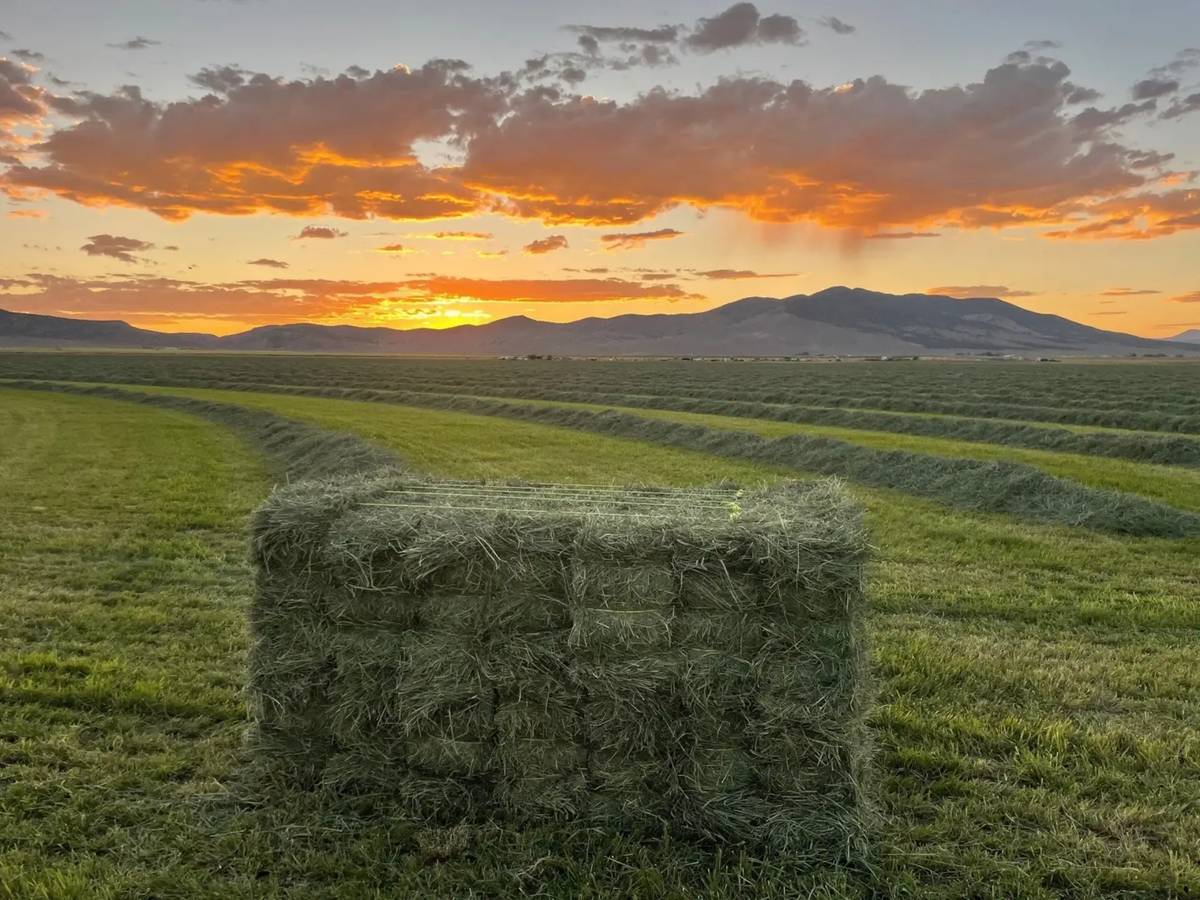
Western hay grown in Nevada is a different animal entirely. The high desert climate (humidity as low as 5 percent, elevations above 5,500 feet, irrigated fields) produces hay that is consistently green, nutrient-dense, and low in mold risk. The wide temperature swings between day and night (highs in the 90s, lows in the 40s) let the plants rest and recover, which improves protein content and palatability.
At Farmers Direct we test the western hay by field, not each bale, so you can see the nutritional value before you feed it. That consistency is what performance barns, breeding farms, and conscientious horse owners are paying for.
The tradeoff is price. Western hay runs $27 to $44.50 per bale depending on the variety, which is significantly more than coastal. But when you factor in the higher nutritional density (your horse eats less per day to get the same nutrition), the actual cost difference per feeding is smaller than the sticker price suggests.
Hay Comparison: Protein, Fiber, and Sugar by Type
This table shows approximate nutritional ranges for the hay varieties we carry at Farmers Direct. Values can vary by cutting, growing conditions, and time of year. We recommend requesting a hay analysis for horses with specific dietary needs.
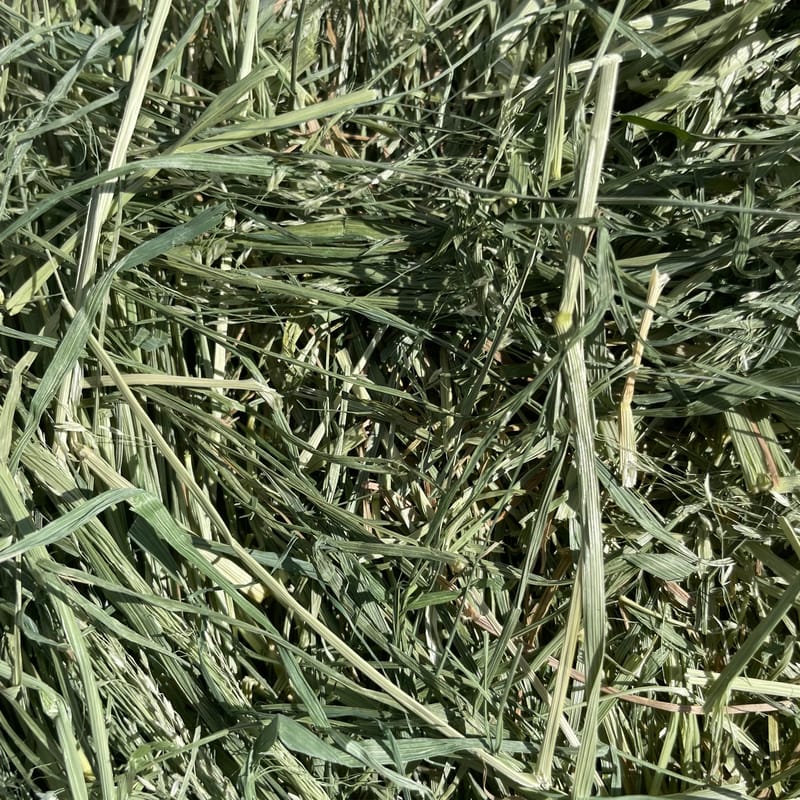
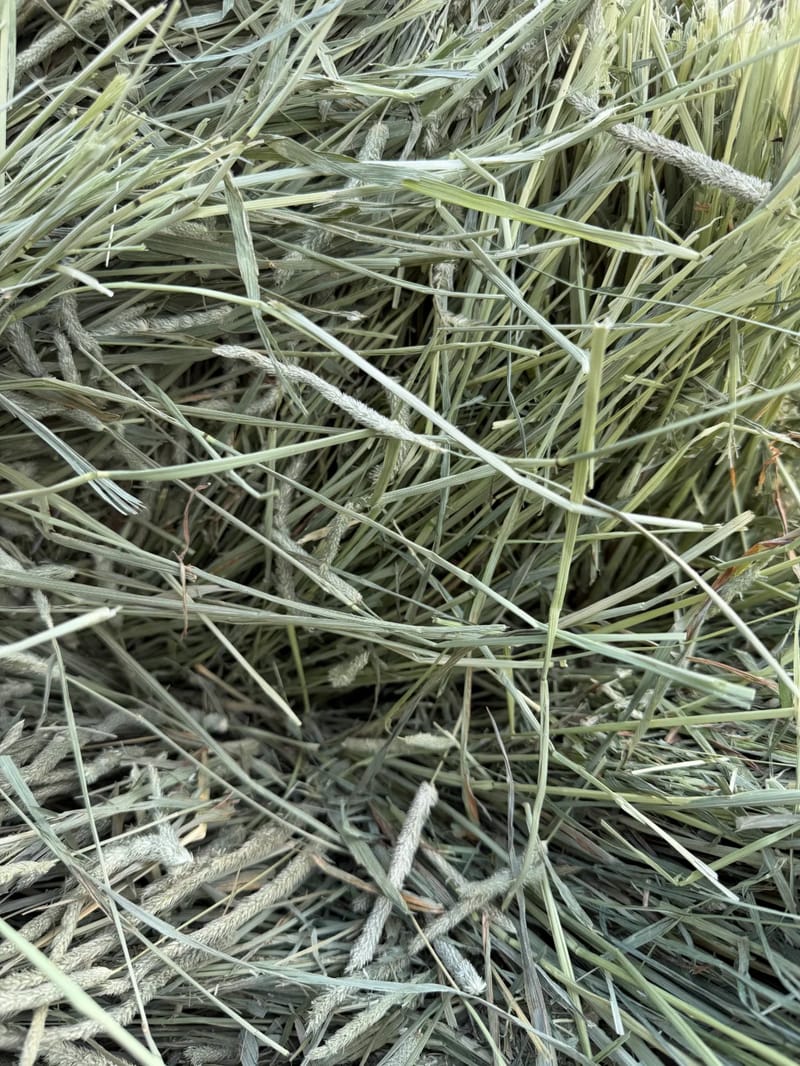
Ultra Premium Timothy: 10 to 12 percent protein, 55 to 60 percent NDF (fiber), 8 to 10 percent NSC (sugar), best for most adult horses at maintenance. Price: $44.50 per bale.
Timothy 1st Cut: 8 to 10 percent protein, 60 to 65 percent NDF, 8 to 10 percent NSC, best for easy keepers and general use. More stem, less leaf. Price: $39.50 per bale.
Timothy 2nd Cut: 10 to 14 percent protein, 50 to 55 percent NDF, 8 to 12 percent NSC, best for picky eaters and performance horses. Softer, leafier, more palatable. Price: $40.50 per bale.
Orchard Grass: 8 to 11 percent protein, 58 to 65 percent NDF, 10 to 14 percent NSC, best for picky eaters and hard keepers. Soft texture that most horses love. Price: $39.75 per bale.
Teff Grass: 8 to 12 percent protein, 60 to 68 percent NDF, 6 to 8 percent NSC, best for horses with metabolic issues (EMS, Cushing's, insulin resistance). Price: $39.00 per bale.
Orchard Alfalfa Mix: 14 to 18 percent protein, 40 to 48 percent NDF, 10 to 12 percent NSC, best for athletes, performance horses, and horses in heavy work. High calorie, high protein. Price: $39.50 per bale.
Peanut Hay: 12 to 16 percent protein, 45 to 55 percent NDF, 8 to 10 percent NSC, best for goats, cattle, and adding variety. A Florida staple. Price: $18.00 per bale.
Timothy Alfalfa Mix: 12 to 15 percent protein, 48 to 55 percent NDF, 9 to 11 percent NSC, best for growing horses and balanced nutrition. Good middle ground between straight timothy and straight alfalfa. Price: $42.00 per bale.
What is NDF (Neutral Detergent Fiber)?
NDF measures the total fiber content of hay, including cellulose, hemicellulose, and lignin. Higher NDF means more fiber and slower digestion, which is good for gut health but means less energy per pound. Hay above 65 percent NDF can be hard for horses to digest efficiently. For most adult horses, 55 to 65 percent NDF is the sweet spot.
What is NSC (Non-Structural Carbohydrates)?
NSC is the combined sugar and starch content. This is the number that matters most for horses with metabolic issues. Veterinarians generally recommend keeping total diet NSC below 10 to 12 percent for horses with EMS, Cushing's, or insulin resistance. Teff grass is the clear winner here at 6 to 8 percent NSC.
Spring Feeding Tips for Horses with Metabolic Issues
Metabolic horses need extra attention in spring. The combination of sugar-rich spring grass and warmer temperatures can trigger laminitis episodes that were well-managed all winter.
Which hay is safest for horses with EMS or Cushing's?
Teff grass is the safest hay option we carry, with NSC levels consistently between 6 and 8 percent. Timothy is the next best option at 8 to 10 percent NSC, depending on the cutting. Avoid alfalfa and orchard grass for metabolic horses, as their NSC levels run higher.
If your current hay tests above 12 percent NSC, soaking it in cold water for 30 to 60 minutes before feeding can reduce sugar content by up to 30 percent. Drain the water completely (do not let the horse drink it) and feed the soaked hay within a few hours to prevent mold.
For metabolic horses, we strongly recommend getting a hay analysis before committing to a new lot. We can help with that at the store.
How much hay should a metabolic horse eat per day?
Feed 1.5 to 2 percent of body weight in dry matter. For a 1,000-pound horse, that is 15 to 20 pounds of hay per day. Use slow-feed hay nets with small openings (1 to 1.5 inch) to extend eating time and prevent gorging. Split the daily ration into three or four feedings if possible.
Do not restrict hay below 1.5 percent of body weight without veterinary guidance. Horses that go too long without forage are at higher risk for gastric ulcers and behavioral issues.
Should metabolic horses graze spring pasture at all?
For most metabolic horses, the safest approach is to avoid spring pasture entirely during the peak growth period (March through May in Central Florida). If turnout is necessary for exercise and mental health, use a grazing muzzle and limit turnout to early morning hours when grass sugar is lowest.
Where to Buy Quality Hay in Central Florida
At Farmers Direct Hay and Feed in Williston, we carry the full range of Western hay varieties listed in this guide, most of it grown on our own Nevada farm and tested by field. We deliver throughout Marion, Alachua, and Levy counties, including Ocala, Gainesville, and The Villages.
Stop by the store at 21091 NE US Hwy 27 in Williston, give us a call at (352) 528-1255, or email sales@farmersdirecthay.com. We are open Monday through Friday from 9 AM to 5:30 PM and Saturday from 9 AM to 2:30 PM.
From the Williston yard
Questions about the right hay for your horse?
Call Hailey at the Williston store, or browse the catalog and we will get a load on the truck. Hay delivery runs across North Central Florida.