Does Alfalfa Make Horses Hot? What We See Feeding It Every Day
On this page
Trennis Ropp is a co-owner of Farmers Direct Hay and Feed in Williston, Florida, and a fifth-generation farmer. He ran the shipping and logistics side of the family hay business for years before he and Delmar took over the Williston store in September 2024.
The idea that feeding alfalfa makes a horse hot or excitable is a myth that has steered owners away from a good forage for decades. Energy density and behavior are not the same thing. A horse that acts up is far more often a management or training question than a hay question. Alfalfa is a protein and calorie dense legume that fits hard keepers, performance horses, growing horses, and broodmares well, and it is worth being thoughtful about for easy keepers because of the calories. As always, build the ration with your veterinarian.
We hear it at the counter all the time: someone wants good hay for a hard keeper, we mention alfalfa, and they wave it off because they have heard it will make their horse hot. It is one of the most repeated beliefs in the horse world. It is also one of the least supported by what we actually see, and we feed alfalfa to our own horses every day.
Does alfalfa make horses hot?
No. Alfalfa does not make horses hot. "Hot" means hyperactive or hard to handle, and that behavior comes from management and training far more than from forage. Alfalfa is energy dense, but energy density and behavior are two different things. A horse on a sound program does not become difficult because there is alfalfa in the ration. If a horse is wound up, the more useful questions are about workload, turnout, training, and overall feed, not the hay alone.
That is not a promise that alfalfa will calm any horse down. It is the opposite point. The hay is usually not the variable people think it is.
Where the myth comes from
The myth comes from coincidence, not cause. A horse that was difficult to handle happened to be eating alfalfa at the time, the alfalfa took the blame, and the story got passed from owner to owner and barn to barn until it sounded like settled fact. The belief is durable because it gets repeated with confidence by people who never actually tested it.
Intuition and consistent observation are different things. When you feed alfalfa to a lot of horses over a lot of years and watch what they actually do, the "hot" pattern does not show up the way the myth says it should. What people are usually seeing is a horse with more energy than its job and turnout are burning off, and that is a management picture, not a bag of hay.
What we see in our own horses
In our own barn, our horses do not act any differently on alfalfa than they would on grass hay. We feed an alfalfa based diet, none of them are hot, and they carry good weight and condition on it. One of our horses went about three weeks without being ridden, which is a real test of whether a feed is going to make a horse silly, and when we got back on, the horse was calm and worked well. That is our honest experience, not a guarantee.
Every horse is an individual, and your results depend on your horse and your program. We are not telling you alfalfa will fix behavior or put weight on a horse that has other things going on. We are telling you that in our barn, with alfalfa in the ration and a normal management routine, calm and well conditioned horses are what we get.
What alfalfa actually gives a horse
Alfalfa is a legume, not a grass, so it feeds differently from timothy or orchard grass. In broad strokes, and remembering that every number varies by cutting and lot (these are typical Equi-Analytical ranges, not a promise for any one bale):
- Protein: high, often the mid teens up into the low twenties percent, well above most grass hays
- Lysine: alfalfa is rich in lysine, the first limiting amino acid for muscle and topline, which is part of why it suits growing and hard-working horses
- Calcium: roughly three times the calcium of grass hay, which is why a heavily alfalfa diet needs the whole ration balanced
- Energy: more digestible energy per pound than grass hay, often around 1.0 to 1.2 Mcal per pound
- Sugar: NSC is often lower than many grass hays, which surprises people
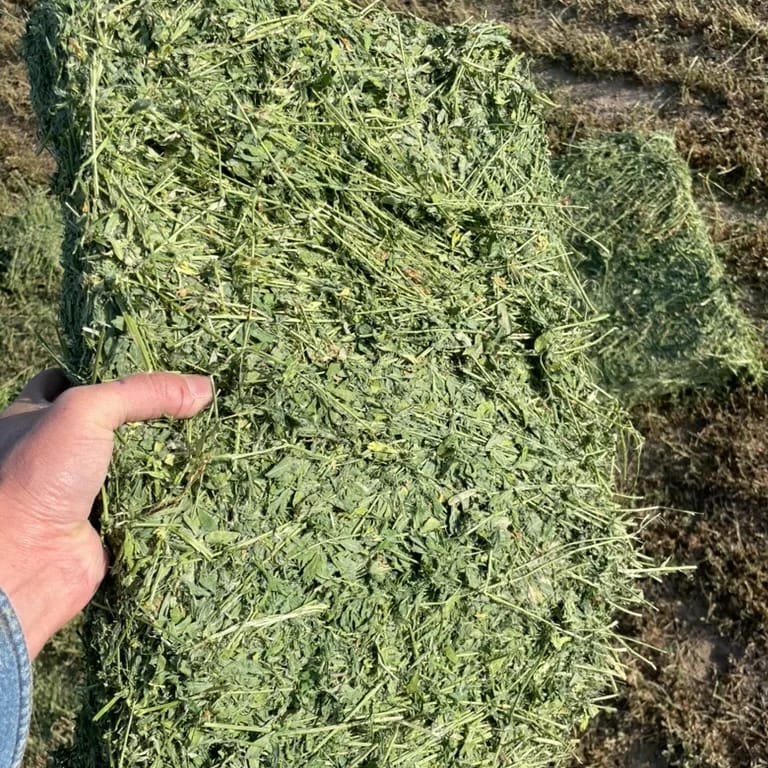
That combination makes alfalfa a strong fit for horses that need to put on or hold condition and protein: hard keepers, performance horses in real work, growing youngsters, and broodmares. Our premium alfalfa is three string, Nevada grown under irrigation, and lab tested so you can see the protein and sugar before you feed it. If you want a middle ground, an orchard alfalfa or timothy alfalfa blend gives you some of the protein and calories with more grass fiber.
When to be thoughtful about alfalfa
Alfalfa is not the right base forage for every horse, and that has nothing to do with the hot myth. The real considerations:
- Easy keepers and overweight horses: alfalfa is calorie dense, so a horse that gains weight on air may not need a straight alfalfa diet. It can still work as part of a ration.
- The calcium to phosphorus balance: alfalfa runs very high in calcium relative to phosphorus, so a heavily alfalfa diet should be balanced toward roughly a 1.5 to 1 or 2 to 1 calcium to phosphorus ratio across the whole ration, which usually means pairing it with grass hay or the right concentrate.
- Metabolic horses: alfalfa is often lower in sugar than grass hay, but a horse with EMS, insulin resistance, or Cushing's needs its forage chosen on the lab numbers, not on type alone. For that, start with our feeding guide for metabolic horses and your veterinarian.
The honest answer to how much alfalfa to feed is that it depends on the horse, its workload, and the rest of the diet, which is a conversation for you and your vet rather than a number off a blog.
Alfalfa vs grass hay: which fits the horse
Neither alfalfa nor grass hay is better across the board; they fit different horses, and many horses do best on a blend of the two. Here is the short version.
- Consideration: Protein. Alfalfa: High, mid teens to low twenties percent. Grass hay (timothy, orchard): Lower, roughly 8 to 12 percent
- Consideration: Calories. Alfalfa: More energy per pound. Grass hay (timothy, orchard): Less energy per pound
- Consideration: Calcium. Alfalfa: High, about 3x grass hay. Grass hay (timothy, orchard): Moderate
- Consideration: Best fit. Alfalfa: Hard keepers, performance, growing, broodmares. Grass hay (timothy, orchard): Easy keepers, maintenance, all day forage
- Consideration: Behavior. Alfalfa: Not a behavior driver in a sound program. Grass hay (timothy, orchard): Not a behavior driver
- Consideration: Sugar (NSC). Alfalfa: Often lower than grass hay. Grass hay (timothy, orchard): Varies widely by cutting; test for metabolic horses
Getting tested alfalfa in Central Florida
If you have been avoiding alfalfa on the strength of the hot myth, it is worth a fresh look for the right horse. The thing that makes the decision easy is knowing what is in the bale. We test the field, not each bale, through Equi-Analytical, so you can match the protein, calcium, and sugar to your horse instead of guessing.
We stock alfalfa and alfalfa blends at the Williston yard on US Hwy 27 and deliver across Marion, Alachua, Levy, Citrus, Putnam, and Sumter counties. Call (352) 528-1255 to ask what the current batch tests show, or browse the full hay lineup and our delivery rates. If you are still deciding which forage fits, our guide on how to choose hay for your horse walks through it by horse type.
Frequently Asked Questions
Does alfalfa really make horses hot?
No. The belief that alfalfa makes horses hot or excitable is a myth. Alfalfa is energy dense, but energy in the diet and difficult behavior are not the same thing. In our own barn we feed an alfalfa based diet and our horses are calm and well conditioned. When a horse is hard to handle, the cause is far more often workload, turnout, or training than the hay it is eating.
Why do so many people believe alfalfa makes horses hot?
Part of it is a simple confusion: alfalfa is higher in protein and calories than grass hay, and people equate more protein with more energy and more energy with hyperactivity. Extra calories do give a horse more fuel, but whether that shows up as bad behavior is a workload and training question, not a protein question. The rest is repetition. A difficult horse happened to be eating alfalfa, the hay got blamed, and the story spread from barn to barn until it sounded like fact. Most people repeating it have never actually compared the same horse on and off alfalfa under the same management.
Is alfalfa good for horses?
For many horses, yes. Alfalfa is high in protein and calcium and richer in calories than grass hay, which suits hard keepers, performance horses, growing horses, and broodmares. It is worth being thoughtful about for easy keepers because of the calories, and metabolic horses should have their forage picked on the lab numbers. Build the ration with your veterinarian.
Will alfalfa make my horse hot after time off work?
In our experience, no. One of our horses went about three weeks without being ridden while on an alfalfa diet and stayed calm and worked well when we picked back up. A break from work is a management factor to plan around regardless of feed, but the alfalfa itself was not the problem. Every horse is different, so manage the return to work sensibly.
Is alfalfa or grass hay better for horses?
Neither is better across the board; they fit different horses. Alfalfa brings more protein, calcium, and calories, which helps horses that need to gain or hold condition. Grass hays like timothy and orchard are lower in calories and better suited to easy keepers and all day forage. Many horses do well on a blend. Choose based on the individual horse, its workload, and a forage test.
From the Williston yard
Questions about the right hay for your horse?
Call Hailey at the Williston store, or browse the catalog and we will get a load on the truck. Hay delivery runs across North Central Florida.