What Does Bad Hay Look Like? How to Spot Moldy, Stemmy, and Spoiled Horse Hay
On this page
- What does bad hay look like?
- Color: bright green is good, brown is old
- Stem and leaf: pick it up and feel it
- Moldy hay: what to look for and why it matters
- Florida storage is where good hay goes bad
- What your eyes cannot tell you
- Signs of good hay vs bad hay
- How we keep bad hay off the truck
- Frequently Asked Questions
Trennis Ropp is a co-owner of Farmers Direct Hay and Feed in Williston, Florida, and a fifth-generation farmer. He ran the shipping and logistics side of the family hay business for years before he and Delmar took over the Williston store in September 2024.
Bad hay gives itself away. Look for a brown or faded color instead of a deep green, coarse heavy stems with little leaf, a dusty or musty smell, and any sign of mold. Good hay is bright, fine stemmed, leafy, and smells clean. In Florida the most common way good hay goes bad is storage: heat and humidity under a tarp or in a closed room trap moisture and grow mold fast. When in doubt, do not feed it, and ask your supplier for the lab test, since your eyes cannot read sugar or protein.
We handle a lot of hay, and we turn some of it away before it ever reaches the yard. Knowing what bad hay looks like is the most useful skill a horse owner can have at a feed store or a farm gate, because the bale in front of you tells you most of what you need to know if you know how to read it. The tells are color, stem and leaf, smell, and mold, and you can read all four with your eyes, hands, and nose before you buy a single bale.
What does bad hay look like?
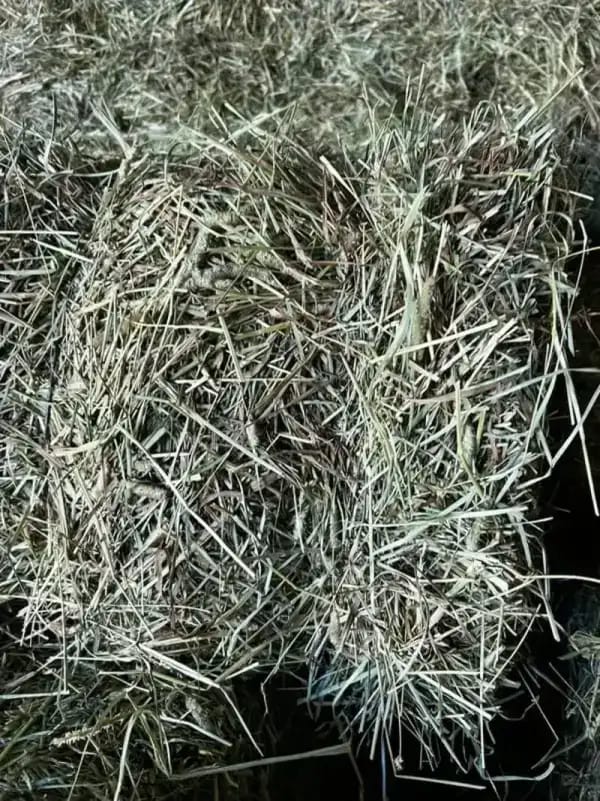
Bad hay is brown or faded instead of a deep green, heavy on coarse stems and light on leaf, and it often carries a dusty or musty smell. The worst of it shows visible mold, white or gray dust that puffs out when you shake a flake, or a sour, off odor. Good hay is the opposite: bright, fine stemmed, leafy, and clean smelling. You can catch most quality problems with your eyes, your hands, and your nose before you ever load a bale.
The four things to check, in order: color, stem and leaf, smell, and dust or mold. We will take them one at a time.
Color: bright green is good, brown is old
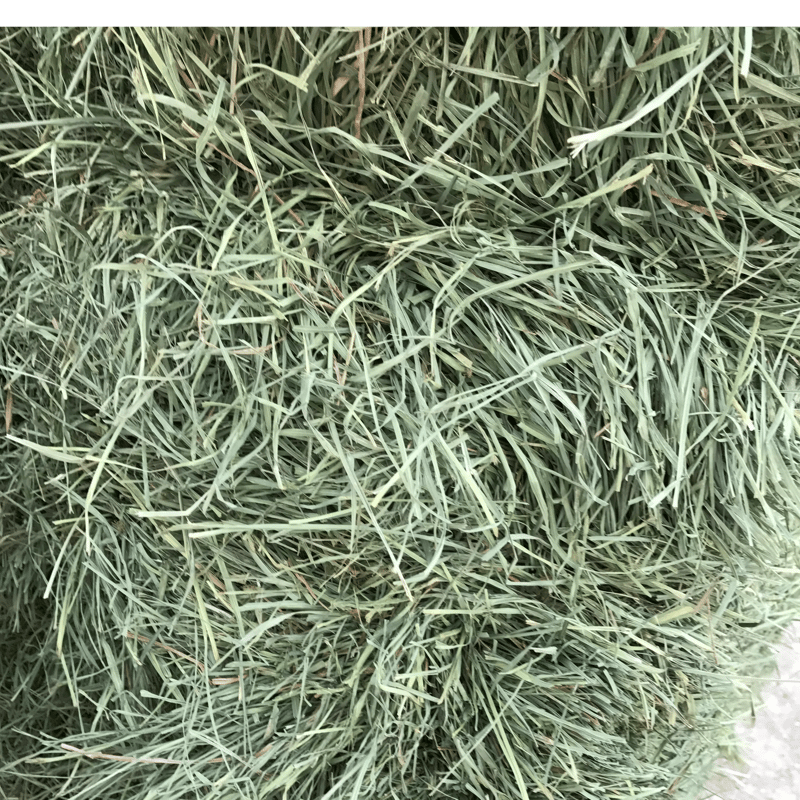
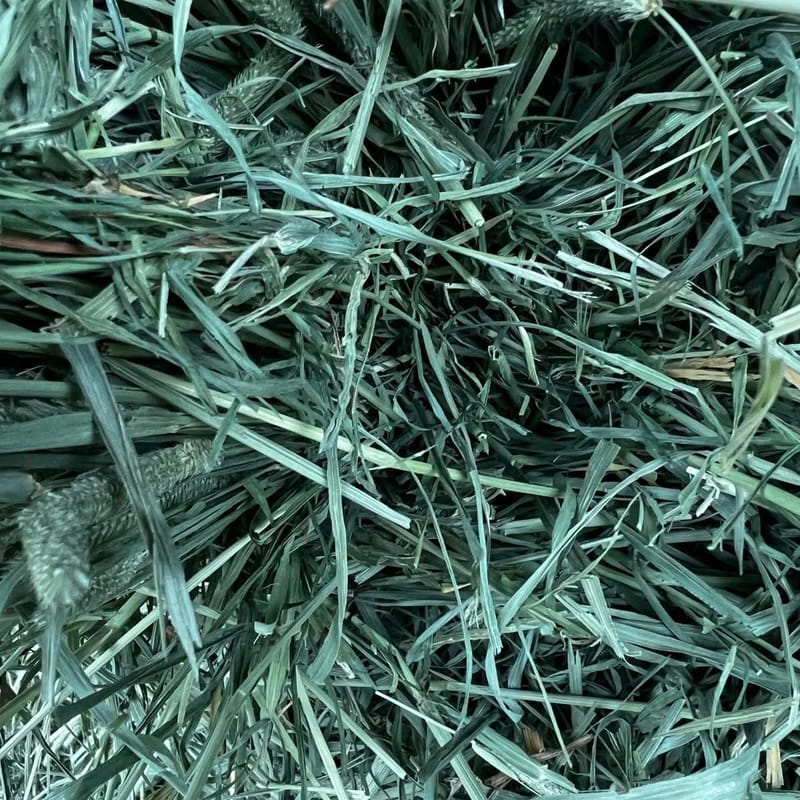
Color is the fastest read. You want a deep, bright green. Alfalfa should be a rich green, and orchard grass has a pretty bluish green cast to it when it is right. A bale that has gone brownish is old, and it has usually lost feed value sitting too long or curing badly.
One color clue is specific to timothy. If timothy is left to grow too long before it is cut, the leaf at the bottom of the plant never sees sunlight and turns brown, close to the color of tree bark. That brown leaf is a sign the hay was cut late and went rank, and horses find it unappealing. A little bleaching on the very outside of a bale from sun exposure is normal and not the same thing. What you are watching for is brown running through the bale, not just a faded outer flake.
Stem and leaf: pick it up and feel it
Good hay feels soft, with fine stems and plenty of leaf; coarse, heavy stems with little leaf mean older, ranker hay your horse will sort and waste. After color, put your hands on the bale. Fine stems and plenty of leaf mean the hay was cut younger, and younger hay is more nutritious. Big, thick stems and not much leaf mean the hay is older and ranker, and animals shy away from it.
This is the difference between a bale your horse cleans up and a bale your horse sorts. Coarse stems are harder to chew and less rewarding to eat, so a horse pulls the leaf and leaves the stems on the floor. If a bale feels prickly and hard instead of soft, that is a bad sign on its own. For more on how cutting and maturity drive this, see our guide on hay cuttings: 1st, 2nd, and 3rd cut.
Moldy hay: what to look for and why it matters
Mold is the one defect you do not compromise on. Pull a flake apart and look into the middle of the bale, not just the outside. Signs of moldy or spoiled hay:
- White, gray, or black dust that puffs out when you shake a flake
- A musty, sour, or sharp smell instead of a clean grassy one
- Flakes that are stuck together in clumps or feel damp or warm
- Visible fuzzy growth or dark, discolored patches inside the bale
Veterinarians link moldy and dusty hay to respiratory problems and colic, so we do not feed it and we do not sell it. If you open a bale at home and find mold, do not feed it. Bring it back and we will exchange it. If your horse has been eating questionable hay and is coughing or off feed, that is a conversation for your veterinarian, not a hay you push through.
Florida storage is where good hay goes bad
A lot of "bad hay" did not start out bad. It was good hay stored wrong. The biggest storage mistake we see in Florida is keeping hay outside under a tarp or in a closed, unventilated room. Our heat and humidity trap moisture against the bales, and that is exactly what mold needs to take hold. Hay that would have lasted for months goes off in weeks.
Keep air moving around your hay and keep it up off the ground and out of the weather, and it lasts a long time. There is no single shelf life number we can give you, because it depends on the cutting, the moisture it went up at, and how you store it, but ventilation and a dry floor are most of the battle. We wrote a full guide on storing hay in Florida heat and humidity if you want the details.
A tip from the yard: Buy what you can store well. A pallet of premium hay stacked in a damp, closed shed will spoil faster than a smaller load you keep in a ventilated, dry spot and turn over quickly. Match your order size to your real storage, not your ideal one.
What your eyes cannot tell you
The visual check rules out the obvious problems, but it cannot tell you the sugar, protein, or fiber in a bale. Two bales can look almost identical and feed very differently, especially for an easy keeper or a metabolic horse where the sugar number actually matters. That is why we test.
We test the field, not each bale, through Equi-Analytical on their Fast Track 600 panel, and the results go on the product page so you can see the protein, NSC, and ESC plus starch before you buy. When we grow our own hay, we target a high relative feed value so the stems are fine enough that horses eat the whole bale instead of sorting it. The lab sheet only matches what your horse gets when your horse eats the whole bale, which loops right back to picking leafy, fine stemmed hay in the first place.
Signs of good hay vs bad hay
Here is the quick side by side we run in our heads when we walk a stack. Good hay should win on every line below, and a bale that fails two or more of these is one to pass on.
- What to check: Color. Good hay: Deep bright green; alfalfa rich green; orchard bluish green. Bad hay: Brown or faded; brown leaf running through the bale
- What to check: Stem and leaf. Good hay: Fine stems, plenty of leaf, soft to the touch. Bad hay: Coarse heavy stems, little leaf, prickly and hard
- What to check: Smell. Good hay: Clean and grassy. Bad hay: Musty, sour, or sharp
- What to check: Dust and mold. Good hay: None. Bad hay: White or gray dust, fuzzy growth, dark patches inside
- What to check: How your horse eats it. Good hay: Cleans it up, stems and all. Bad hay: Sorts it, leaves stems on the floor
- What to check: Lab test. Good hay: Available on request. Bad hay: None offered
How we keep bad hay off the truck
We turn loads away. The tell is the same one you use at home: prickly, hard hay with a bad color that the animals will not eat. We once refused a load of Canadian hay, and it was not even ours to begin with, because it showed every one of those signs. We would rather come up short on a variety for a week than put a bad bale on your trailer.
If you want hay you can trust without inspecting every bale yourself, that is the job we are trying to do for you. Stop by the Williston yard on US Hwy 27, or call (352) 528-1255 and ask which current batch has been tested and what the numbers show. We can pull it up. We also deliver across Marion, Alachua, Levy, Citrus, Putnam, and Sumter counties, with rates and zones on our delivery page.
Frequently Asked Questions
Can horses eat slightly moldy hay?
No. We do not feed moldy hay, even a little, and we do not recommend it. Mold and the dust that comes with it are linked to respiratory problems and colic in horses. If you open a bale and find mold or it puffs dust when you shake it, set it aside and do not feed it. If you bought it from us, bring it back for an exchange. If your horse has already been eating it and seems off, call your veterinarian.
What does bad hay smell like?
Good hay smells clean and grassy. Bad hay smells musty, sour, or sharp, which usually means it was baled too wet or has taken on moisture in storage. A strong smell is a reason to pull a flake apart and look into the middle of the bale for mold, dust, or damp, clumped flakes before you feed any of it.
Is brown hay bad for horses?
A little sun bleaching on the outside of a bale is normal and not a real problem. Brown running all the way through the bale is different. It usually means the hay was cut late and went rank, or it has aged and lost feed value. With timothy especially, brown leaf low on the plant is a sign it was cut too mature. Open the bale and check whether the brown is just the outer flake or the whole thing.
How long does hay last in Florida before it goes bad?
Stored well, good hay commonly keeps for many months; stored badly in Florida humidity, it can mold within a few weeks. There is no single shelf life number, because it depends on the cutting, how dry the hay was when it was baled, and how you store it. The deciding factor here is storage: keep hay up off the ground, out of the weather, and with air moving around it, and keep it off the dirt and out from under tarps and closed, humid sheds. Buy what you can store well.
How can I tell good hay from bad before I buy a whole load?
Check four things: color, stem and leaf, smell, and mold. You want deep green, fine soft stems with plenty of leaf, a clean smell, and no dust or fuzzy growth inside a pulled flake. Then ask the seller for a forage test. The visual check catches the obvious problems, but only a lab analysis tells you the sugar, protein, and fiber, which matters most for easy keepers and metabolic horses.
From the Williston yard
Questions about the right hay for your horse?
Call Hailey at the Williston store, or browse the catalog and we will get a load on the truck. Hay delivery runs across North Central Florida.