Understanding Hay Cuttings: 1st vs 2nd vs 3rd Cut
On this page
If you have spent any time shopping for horse hay, you have probably seen labels like "1st cut," "2nd cut," or sometimes "3rd cut." These terms come up constantly, and for good reason. The cutting number tells you a lot about what you are getting. But it does not tell you everything, and that distinction matters.
We have been in the horse hay business since 2012, and we hear questions about cuttings almost every day at our Williston, FL store. "What's the difference between first and second cutting timothy?" is one of the most common questions customers ask us. This guide breaks down what each cutting actually means, how they differ nutritionally, and which one is right for your horse.
What Does "Cutting" Mean?
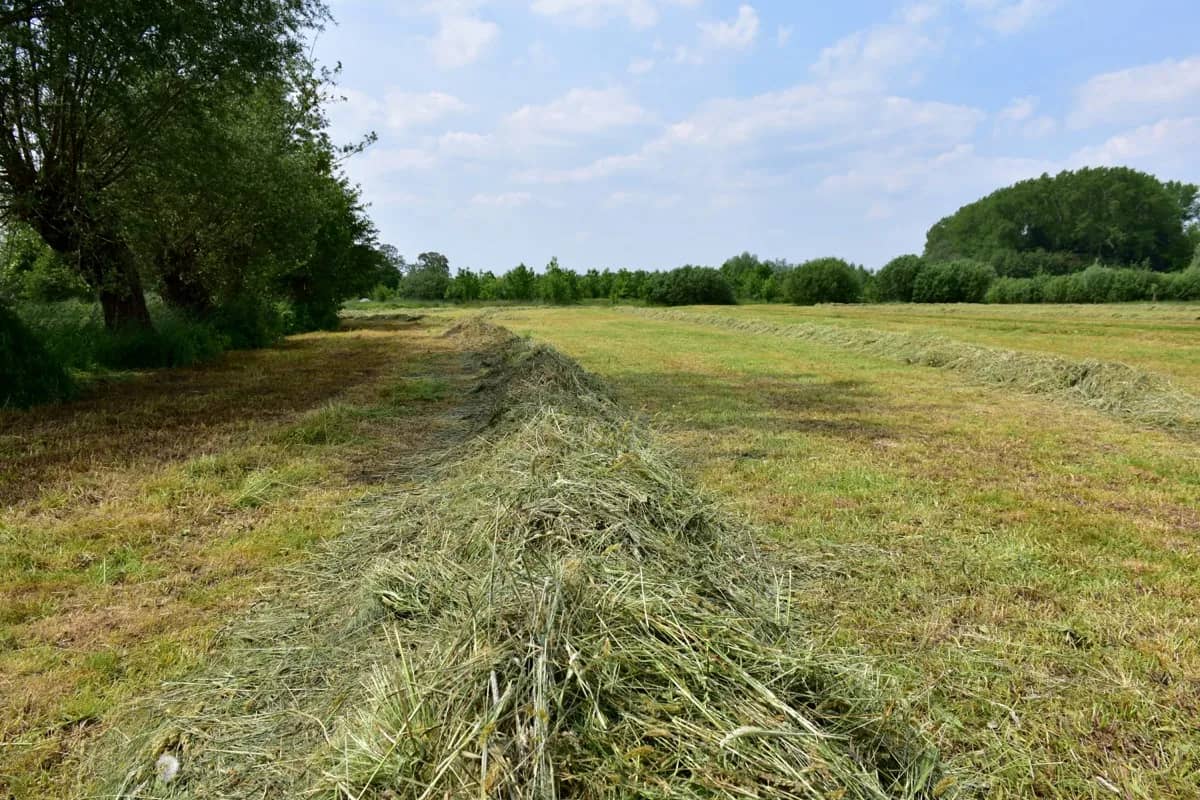
A "cutting" refers to which harvest of the growing season the hay comes from. After a field of timothy, orchard grass, or alfalfa is planted and established, it grows until the farmer decides the plants are ready to harvest. That first harvest is the 1st cut. After the hay is removed, the plants regrow from the roots, and the second harvest is the 2nd cut. If the growing season is long enough, a 3rd cut follows.
Most fields in Nevada, where all of our hay comes from, produce two to three cuttings per year. Some fields in ideal conditions can produce up to four. Each successive cutting produces hay with noticeably different physical and nutritional characteristics. These differences are real and measurable, not just marketing labels. The plants are at different growth stages, with different leaf-to-stem ratios and different nutrient concentrations, which translates directly to what your horse gets from every flake.
1st Cut Hay: The Foundation
What It Looks Like
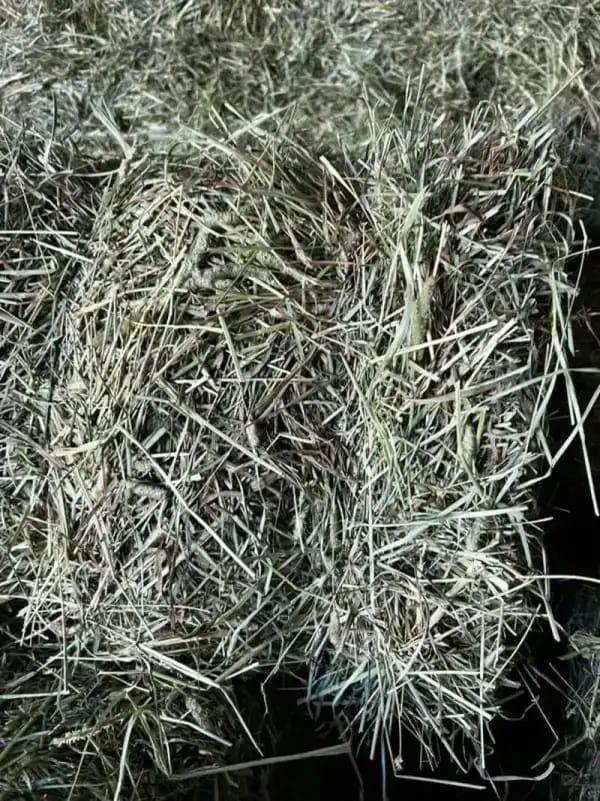
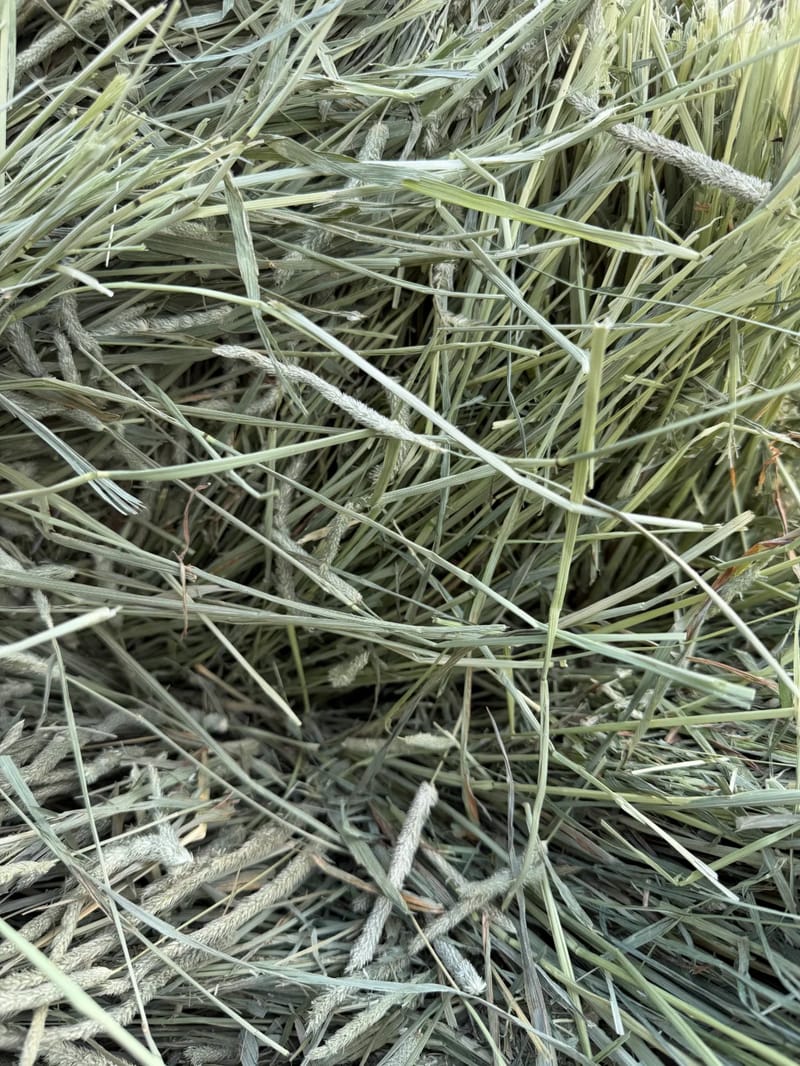
First cut hay has more stem relative to leaf. The stems are thicker and coarser than later cuttings, and you will often see seed heads, especially in timothy. Timothy seed heads are actually one way you can visually confirm you are looking at a 1st cut. The color ranges from green to lighter green, and there is more structural plant material throughout the bale. When you pull a flake apart, it feels firmer and more substantial than later cuttings.
Nutritional Profile
First cut has the highest fiber content of all cuttings and the lowest protein and fat content. The higher NDF (neutral detergent fiber) means slower digestion, which keeps horses chewing longer for every pound consumed. Generally, 1st cut has lower calorie content per pound, making it a functional choice for specific situations. The higher fiber also promotes healthy gut function and keeps the hindgut microbiome active, which is important for overall digestive health.
Best Uses
First cut works well for horses that need to lose weight, because the high fiber and lower calories mean they chew longer for fewer calories consumed. This is a genuine management advantage: a horse on a 1st cut in a slow feeder stays occupied and satisfied even though it is consuming fewer calories than it would on a richer hay. Easy keepers, horses on restricted diets, and "air ferns" (those horses that seem to gain weight just looking at food) all benefit from 1st cut.
First cut is also a good choice for slow feeders in general, since the coarser texture takes longer to pull through the small openings of a hay net, extending eating time even further.
That said, 1st cut is generally not ideal for senior horses with dental problems. The coarser stems can be harder for older horses to chew effectively, and poor chewing means poor nutrient extraction. Seniors with dental issues are usually better served by a softer 2nd cut or orchard grass.
Why 1st Cut Gets a Bad Reputation (and Why It Shouldn't)
First cut sometimes gets labeled as "weedy" or "stemmy," and people assume that means it is low quality. That is not necessarily true. A well-made 1st cut can be excellent hay. The key factor is how mature the plants were when the field was cut, not simply that it was the first harvest of the season. An early 1st cut taken before the plants reach full maturity can be surprisingly good in both texture and nutritional value. The difference between a 1st cut harvested at early bloom versus one harvested weeks later at full seed is dramatic.
We carry Nevada-grown Timothy 1st Cut at $39.50 per bale. It is a low-sugar, fine-stem hay that our customers feed with confidence. The quality of our 1st cut is something we are proud of, because it all comes from irrigated fields in Nevada's high desert, where the dry climate produces consistently well-cured hay. Very few feed stores can claim they actually grow the hay they sell, and we take our sourcing seriously.
2nd Cut Hay: The Sweet Spot
What It Looks Like
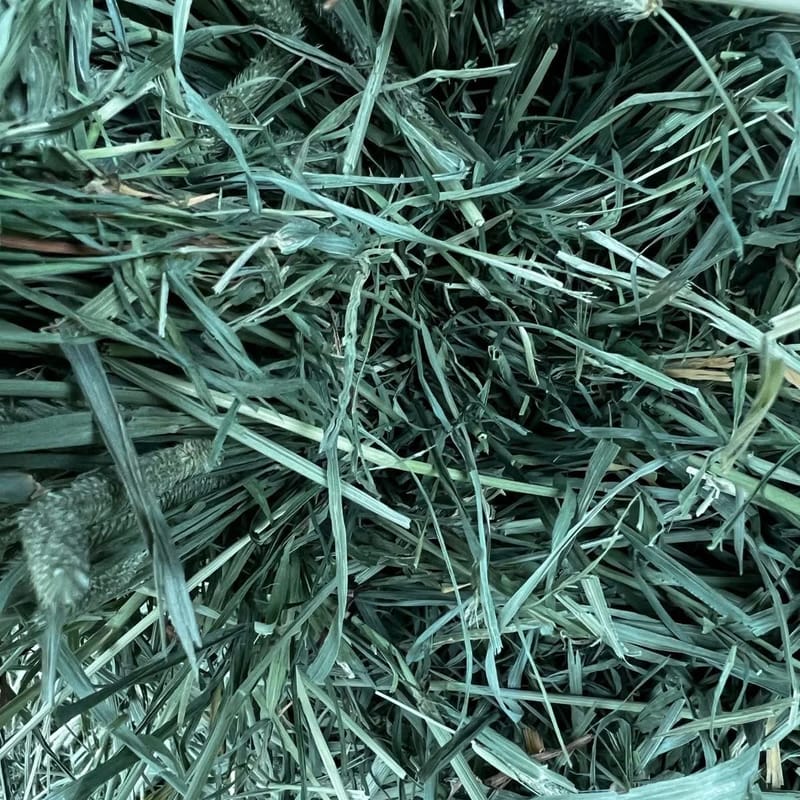
Second cut is what most people picture when they think of premium horse hay. The stems are finer, there are more leaves relative to stem, and the overall texture is softer. The color tends to be a vibrant green with less seed head material. When you flake it apart, it separates cleanly and easily. The overall impression is a denser, leafier product that feels noticeably different from 1st cut when you handle it.
Nutritional Profile
Second cut has moderate fiber (less than 1st cut), higher protein, and higher fat content. There is more digestible energy per pound, making it more nutrient-dense overall. For most horses in most situations, 2nd cut represents the best balance of fiber, protein, and palatability. The improved leaf-to-stem ratio means a higher percentage of the bale is the most nutritious part of the plant.
Best Uses
This is what most horse owners want and what most barns stock. Second cut is the right choice for most adult horses in moderate work, horses that need a good balance of fiber and nutrition, and picky eaters who refuse coarser hay. It is our most popular seller at Farmers Direct, and we understand why. "My horses love your hay" is something we hear from 2nd cut customers all the time.
Why 2nd Cut Costs More
There are real reasons 2nd cut carries a higher price, and understanding them helps you see why the market works the way it does.
Demand is higher because most horse owners prefer it, which creates competition among buyers. Yield is lower because the second growth produces less tonnage than the first cutting from the same field. The farmer harvests fewer bales from the same acreage. And the better leaf-to-stem ratio means higher feed value per bale, so you are getting more nutrition per dollar even at the higher price.
Our Timothy 2nd Cut is $40.50 per bale, compared to $39.50 for 1st cut. That two-dollar difference reflects the market reality of supply and demand, not an arbitrary markup. Both are Nevada-grown, both are quality hay. The 2nd cut just has characteristics that most buyers want.
3rd Cut Hay: The Richest
What It Looks Like
Third cut is the softest, leafiest hay you will find. The stems are extremely fine, there is almost no coarse material, and the color is a deep green. Compared to 1st cut from the same field, it looks almost like a different product entirely. The texture is sometimes described as buttery, and horses that are offered 3rd cut alongside other hays will often eat it first.
Nutritional Profile
Third cut has the lowest fiber of all cuttings, the highest protein and fat content, and the highest calorie density. It is very easily digestible, which makes it a concentrated source of nutrition. Pound for pound, 3rd cut delivers more energy, more protein, and more fat than any other cutting number.
Best Uses
Third cut is best suited for underweight horses that need to gain condition quickly, horses in very heavy work who burn through calories, lactating mares with the highest nutritional demands of any life stage, and growing weanlings who need concentrated nutrition to support rapid development. These are all situations where maximum calories and protein per pound matter more than fiber content.
The Catch
Third cut is not always available. It depends on the growing season length, and in most regions the yield from the third harvest is the smallest of any cutting. The weather window for a successful 3rd cut is narrow, and a late-season rain event can ruin the entire harvest.
Third cut can also be too rich for some horses. Switching abruptly from coarser hay to a very rich 3rd cut can cause digestive upset, including soft stools or mild colic. If you do use 3rd cut, transition gradually over 7 to 10 days, just like any feed change. Mix the new hay in increasing proportions with the old.
Third cut is also not appropriate for metabolic horses or easy keepers. The calorie and sugar density work against weight management goals.
How Maturity at Harvest Affects Quality (Regardless of Cutting)
Here is something important that many horse owners overlook: the cutting number is only part of the story. A 1st cut harvested at early bloom can actually be higher quality than a 2nd cut harvested too late in the growth cycle. As plants mature, fiber increases and protein decreases, regardless of which cutting it is. The biological process is the same whether it is the first, second, or third harvest.
This means that timing within the cutting matters enormously. A farmer who cuts at the right stage of plant maturity produces better hay than one who waits too long, regardless of the cutting number. It is one of the reasons we are selective about where we source. The farmers we work with in Nevada understand when to cut for optimal horse hay quality.
The best indicator of quality is the actual lab analysis, not the cutting number on the label. We encourage our customers to look at the hay itself: the color, the texture, the smell, the leaf-to-stem ratio. And if you are managing a horse with specific dietary needs, get a hay analysis done. Equi-Analytical Labs offers testing starting at $24. For a deeper understanding of hay types and nutrition, see our guide: "How to Choose the Right Hay for Your Horse."
What Farmers Direct Carries and Why
We stock specific cuttings based on what Central Florida horse owners actually need. All of our hay comes from Nevada, where the high desert, dry climate, and irrigated fields produce consistently high-quality Western hay.
Timothy 1st Cut ($39.50 per bale): Nevada-grown, low sugar, fine stem. Great for horses that need high fiber without excess calories. Popular with owners managing easy keepers and with customers who want a budget-friendly option without sacrificing quality.
Timothy 2nd Cut ($40.50 per bale): Nevada-grown, super leafy, fine stem. Flakes beautifully. This is our most popular seller and the hay most of our customers prefer for everyday feeding. If you are not sure which cutting to try first, start here.
Ultra Premium 2nd Cut Timothy ($44.50 per bale): Our premium Western Timothy and Alfalfa blend. This is for customers who want the highest-quality hay available, combining the balanced fiber of timothy with the protein and palatability of alfalfa in one bale. Popular with barns feeding performance horses.
We source these specific cuttings because they cover the range of needs we see in our customer base across Marion County and beyond. Whether you are feeding a retired pasture horse or a competition athlete, one of these fits. For help figuring out how many bales you need per month, see our feeding calculator guide: "How Much Hay Does Your Horse Need?"
Frequently Asked Questions
Is 2nd cut always better than 1st cut?
Not necessarily. A well-harvested 1st cut can be excellent hay. The cutting number tells you about the growth cycle, but actual quality depends on when in the maturity stage it was cut, how it was dried, and how it was stored. That said, 2nd cut does tend to be leafier and softer, which most horses and owners prefer. For easy keepers that need calorie restriction, 1st cut may actually be the better choice.
Why don't you carry 3rd cut timothy?
Third cut timothy is relatively rare and produced in small quantities. The growing season in Nevada typically allows for two to three cuttings, but 3rd cut yield is small and quality can be inconsistent due to the narrow harvest window. Our Ultra Premium 2nd Cut provides the rich, leafy qualities that 3rd cut is known for, with more reliable availability throughout the year.
Can I switch between cuttings without issue?
Yes, but do it gradually over 7 to 10 days, just like any feed change. Going from a coarse 1st cut to a rich 3rd cut abruptly can cause digestive upset. Mix the new hay in increasing proportions over the transition period. Even though it is the same grass species, the nutritional profile is different enough that your horse's gut microbiome needs time to adjust.
Does the cutting number affect sugar content?
It can, but it is not a reliable predictor. Sugar and starch levels depend more on the specific grass species, time of day it was cut, weather conditions, and maturity stage than on the cutting number. If you are managing a metabolic horse, get the hay tested rather than relying on the cutting number alone. A 1st cut and a 2nd cut from the same field can have very different NSC levels depending on conditions at harvest.
If you have questions about which cutting is right for your horse, stop by Farmers Direct Hay & Feed at 21091 NE US Hwy 27 in Williston, FL. We serve horse owners across Ocala, Gainesville, Summerfield, Newberry, Dunnellon, and all of Central Florida. We pride ourselves in our quality of hay and our service. Give us a call at (352) 528-1255, and we will help you figure out exactly what your horse needs.
From the Williston yard
Questions about the right hay for your horse?
Call Hailey at the Williston store, or browse the catalog and we will get a load on the truck. Hay delivery runs across North Central Florida.