Nevada Timothy Hay vs Canadian Hay vs Florida-Grown: A Central Florida Buyer's Guide
On this page
Why Does It Matter Where Hay Comes From?
If you have been comparing Nevada timothy hay vs Canadian hay for your Central Florida barn, the short answer is that both are premium products with real strengths, and most experienced barn managers end up using a mix. The reason origin matters at all is that the bale on your barn floor only looks the same. The price tag says it grew somewhere. Beyond that, a lot of horse owners do not think much about hay origin until something goes wrong, a horse stops eating, a metabolic horse spikes after a new load, or a feed budget runs over because the cheapest hay in the area turned out to be the wrong fit.
Soil, climate, irrigation, altitude, and growing methods all change the nutritional profile of a hay, even when two fields are growing the same species. Timothy grown at 6,000 feet on dry-irrigated Nevada acreage and timothy grown rain-fed at 60 feet in Tennessee are not the same product. Florida is a special case: the state's subtropical climate cannot grow most of the cool-season grasses horse owners are used to feeding, so the bulk of Central Florida hay arrives by truck from out west or up north.
Understanding the three origins on the Florida shelf, Nevada, Alberta, and Florida itself, makes the price differences make sense and helps you pick the right hay for the horse in front of you.
Nevada-Grown Hay: The Gold Standard for Western Forages
Why Nevada
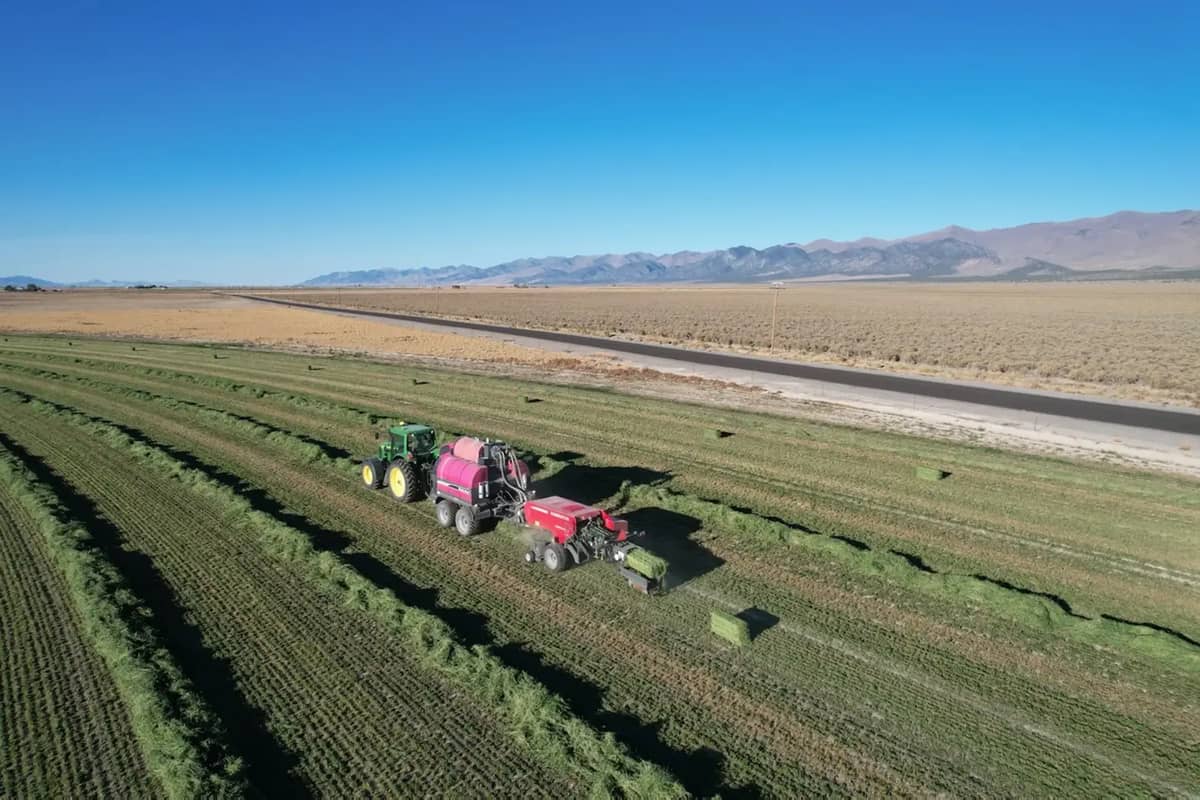
Nevada sits in the Great Basin, an arid high-desert region with very low humidity, irrigation-fed valleys, and dry curing conditions that hay growers in wetter regions only dream about. The Lahontan Valley, Lovelock, and Yerington areas have decades of horse-hay reputation behind them. Many of the country's top performance barns specifically request Nevada hay because the consistency between fields and between cuttings is unusually high.
What Makes It Premium
Three things separate Nevada hay from rain-fed hay grown east of the Rockies:
- Dry curing. Cut hay needs to drop from about 70 percent moisture in the field to about 15 percent moisture in the bale. In a humid climate that drying happens slowly, which gives mold and yeast a head start. In Nevada the dry desert air pulls moisture out quickly and the leaf-to-stem ratio is preserved.
- Irrigation control. Pivot and flood irrigation lets the grower turn water on and off on demand. No rained-out cuttings, no drought-stressed second cuts, no surprise nutrient swings from one bale to the next.
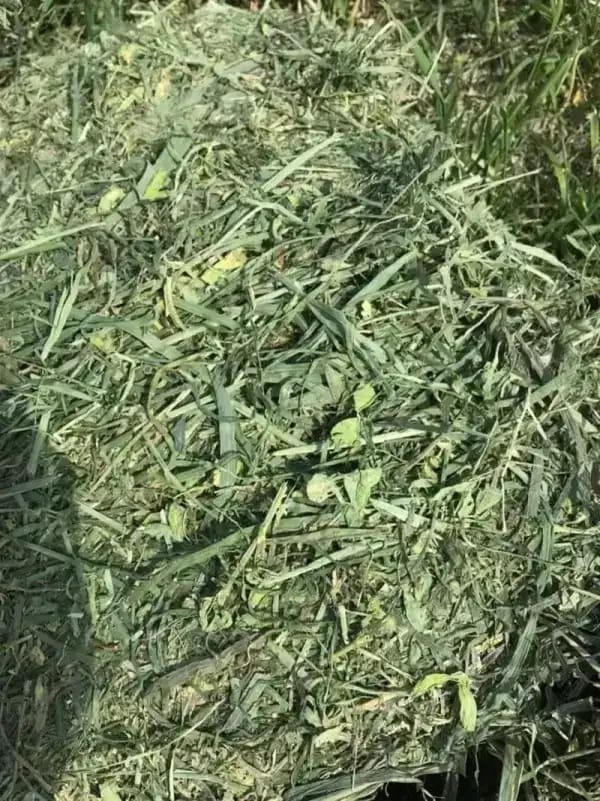
- Bright color and sweet smell. Properly cured Nevada hay shows up bright green inside the bale, with fine stems and minimal brown leaf. That is the visual cue your hay was cured fast and stored dry, which is what shelf life and palatability both depend on.
What Farmers Direct Carries from Nevada
The Ropp family owns Nevada hay farms, so our western hay comes directly from family-managed fields, not through a regional broker. Direct-source pricing matters when freight is already a large part of the per-bale cost.
- Orchard Grass at $39.75 a bale: soft, leafy, three-string, tests at 8 to 11 percent protein with high fiber. Best for picky eaters and hard keepers.
- Timothy 1st Cut at $39.50 a bale: low sugar, fine stem, tests at 8 to 10 percent protein with 8 to 10 percent NSC. A reliable everyday hay for adult horses.
- Timothy 2nd Cut at $40.50 a bale: leafier than first cut, tests at 10 to 14 percent protein. Flakes well and stays palatable through the bottom of the bale.
- Ultra Premium 2nd Cut Timothy at $44.50 a bale: hand-selected lot by lot for leaf-to-stem ratio. Show-barn quality.
- Premium Alfalfa at $36.00 a bale: three-string, 18 to 22 percent protein, grown under pivot irrigation in Nevada's high desert.
We test the western hay by field at Equi-Analytical, so you can see the crude protein, ESC, NSC, calcium, and the rest of the nutritional panel before you feed. Our most recent Timothy 1st Cut load (Equi-Analytical sample TM1, sampled August 2025) tested at 8.4 percent crude protein, 6.7 percent NSC, and 12.1 percent moisture, well inside the ranges we advertise. The full PDF is linked from the product page.
Canadian Hay (Alberta): The Northern Premium
Why Alberta
The eastern slopes of the Canadian Rockies grow some of the cleanest timothy on the export market. The combination of high latitude (long summer daylight hours), cold winters that break pest and disease cycles, and clean mountain runoff for irrigation produces a forage profile that competes directly with western US hay. Alberta is a major global source of compressed timothy and timothy-alfalfa for the horse market.
The Compressed Bale Format
Canadian export hay almost always arrives in compressed bales. The mill takes a conventional 50 to 70 pound bale, runs it through a hydraulic press to reduce its volume by roughly half, then re-wraps it in heavy poly or twine. The hay itself is unchanged; the format reduces shipping volume so the freight math from Alberta to Florida actually works.
When you open a compressed bale at the barn it expands back to roughly normal density within a minute or two. Compressed bales are easier to stack, lighter to carry one at a time, and produce less leaf loss in transport.
What Farmers Direct Carries from Canada
The Ropp family contracts with Alberta farms for four to five loads a year, which fills the demand for an economical everyday hay alongside our Nevada premium lines.
- Western Canadian Timothy Alfalfa at $20.00 a compressed bale: high-fiber timothy with alfalfa for protein, grown in Alberta. An affordable option for multi-horse barns or pasture supplementation.
The per-bale price looks lower than our Nevada hay, but compressed bales weigh less, so the per-pound cost lands in roughly the same range. The trade-off is real choice: Nevada hay for the picky show horse, Canadian hay for the trail horses, peanut hay for the goats. We carry all three so you do not have to drive to three suppliers to build the program.
Florida-Grown Hay: Local and Warm-Season
What Actually Grows in Florida
Cool-season grasses (timothy, orchard, fescue) cannot grow in Florida's subtropical climate. The combination of sandy soils, summer heat, year-round humidity, and short cold-stress periods means cool-season species germinate, struggle, and die. Florida's hay industry is built almost entirely on warm-season grasses: bermudagrass varieties (Coastal, Tifton 85, Russell), bahiagrass, and the standout for horse owners, perennial peanut.
Florida hay production fluctuates year to year with hurricanes, droughts, and freeze events. Demand from the state's large equine population exceeds in-state production every year, which is why timothy, orchard, and alfalfa always need to be imported.
Peanut Hay: Florida's Star Performer
Perennial peanut is a warm-season legume native to South America that has been adapted to the Southeast over the last forty years. It grows reliably across North Florida, South Georgia, and South Alabama, and it is the closest thing the South has to a regionally produced alfalfa substitute.
The peanut hay nutritional profile:
- Protein 12 to 16 percent (comparable to many alfalfa cuttings)
- High digestibility, fine stems, palatability that wins over horses who reject coarser warm-season grasses
- Distinctive earthy aroma that most horses find appealing (it does smell different from timothy or orchard, which is normal and not a quality issue)
Farmers Direct carries Peanut Hay at $18.00 a bale, sourced from Southeast US growers. It is the most affordable high-protein hay on our shelf and a strong choice for owners who want to support regional agriculture while still getting alfalfa-class nutrition.
Why Florida Horse Owners Still Need Imported Hay
Even with peanut hay as a local high-protein option, most Central Florida barns need imported hay for two reasons:
- Total in-state supply does not meet total in-state demand. Florida produces hay, but the state's horse population, especially across Marion, Alachua, and Levy counties, consumes more than the state grows. Imported hay fills the gap.
- Cool-season grasses have nutritional profiles warm-season grasses cannot match. Many vets and trainers specify timothy or orchard for sport horses, broodmares, or metabolic horses. Peanut hay is excellent but not a replacement for a low-sugar timothy when a horse needs that exact profile.
The smart strategy for most Central Florida barns is mixed feeding: an imported cool-season hay as the daily base, plus a Florida-grown legume hay like peanut for variety and added protein.
Head-to-Head Comparison
Comparison: Factor
Primary species: Nevada Timothy, orchard, alfalfa | Alberta, Canada Timothy, timothy-alfalfa blends | Florida Bermudagrass, peanut, bahia
Climate advantage: Nevada Arid, fast dry curing | Alberta, Canada Cold winters, long summer days | Florida Native warm-season
Consistency lot to lot: Nevada Very high (irrigated, dry-cured) | Alberta, Canada High | Florida Variable (weather dependent)
Typical shipping distance: Nevada ~2,500 mi | Alberta, Canada ~3,000 mi (compressed) | Florida Local
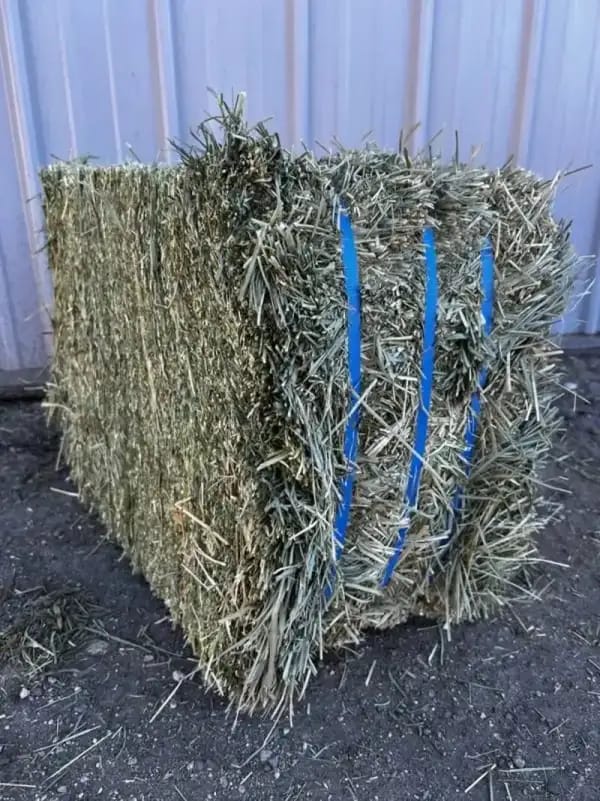
Bale format: Nevada 3-string, 85-100 lb | Alberta, Canada 2-string compressed, 50-60 lb | Florida 2-string, 50-70 lb
Price range at Farmers Direct: Nevada $36.00 to $44.50 | Alberta, Canada $20 a compressed bale | Florida $18 (peanut)
Best for: Nevada Premium timothy, orchard, alfalfa | Alberta, Canada Economical daily feed | Florida Local protein, supplementation
How We Help Customers Pick a Combination
We do not tell people there is one right hay. What we do is ask three questions when a new customer comes through the yard or calls the office.
How is the budget set up. A boarder paying flat-rate at someone else's barn does not care about per-bale cost the same way an owner-operator running five horses on a fixed monthly feed line does. For the owner-operator we often recommend Canadian timothy-alfalfa at $20 a compressed bale as the daily base for horses in light to moderate work, then a Nevada cut on top for the picky one or the hard keeper. The per-pound cost is roughly comparable across the two origins (the Canadian compressed bales weigh less, so the per-bale price is lower), but the mixed program keeps the show horse fed the way the trainer wants while taking some pressure off the everyday feed line.
What is on the vet's note. If a vet has spelled out timothy, low NSC, or low sugar specifically (most common for metabolic horses, EMS, IR, Cushing's), we steer to our Nevada Timothy 1st Cut or our Teff Grass. Teff is the safest fiber on the shelf for those horses at 6 to 8 percent NSC. There is no good reason to gamble on a hay whose nutritional profile is unknown when the vet has given a target.
Who is doing the feeding. A 17-year-old daughter who flakes one bale every morning before school cares about how the bale handles. Canadian compressed bales are smaller and lighter to throw. Three-string Nevada bales pack more hay per bale but weigh more. Both flake cleanly when stored right.
Most customers end up running two or three hays at once. A common Central Florida combination looks like Nevada Timothy 1st Cut as the daily base, Florida peanut hay in two or three feedings a week for protein variety, Canadian timothy-alfalfa for the rough keeper at the end of the row, and Teff Grass for the one metabolic horse. We stock all of those at the Williston yard so you can build the combination in one stop instead of driving to three feed stores.
Frequently Asked Questions
Why is hay from out west so much more expensive than local hay?
Shipping. A truckload traveling 2,500-plus miles from Nevada to Central Florida pays significant freight, which gets passed through to the per-bale price. The quality difference is real though: dry-cured western hay is more consistent, has a longer shelf life, and produces fewer "throw it out" bales. For most horses, the per-feeding cost works out close to the cheap regional alternative once you factor in waste.
Is Canadian hay lower quality because the bales are cheaper?
No. Canadian compressed bales weigh less per bale (50 to 60 pounds versus 85 to 100 for a Nevada three-string), so the per-bale price is lower but the per-pound cost is comparable. Alberta produces world-class timothy, and the compressed format is a shipping efficiency, not a quality compromise.
Can I feed my horse only Florida-grown hay?
You can, but your options are limited to warm-season species (bermudagrass varieties, peanut hay, bahiagrass). These are nutritionally different from cool-season grasses. If your vet recommends timothy or orchard, you will need imported hay. Many owners use peanut hay as part of a mixed program rather than as the only forage.
Does long-distance hay lose quality during shipping?
Properly baled and stored hay holds quality for months. Western hay is baled below 15 percent moisture, so it travels well. The risks are wet weather during the trip and improper storage once the load lands. Reputable suppliers inspect every load on arrival and reject damaged product.
Why does peanut hay smell different from timothy?
Peanut hay is a legume, like alfalfa, and has a distinctive earthy aroma. It is normal and not a sign of quality issues. Most horses find peanut hay highly palatable, sometimes after one or two feedings to acclimate.
Does Farmers Direct deliver across Central Florida?
Yes. Delivery runs Monday through Friday across Marion, Levy, Alachua, and Citrus counties out of our Williston yard. Pricing is $35 flat within 25 miles, $40 from 25 to 40 miles, and a custom quote past 40 miles. See our delivery page for the full zone map. Pickup at the Williston store runs six days a week.
From the Williston yard
Questions about the right hay for your horse?
Call Hailey at the Williston store, or browse the catalog and we will get a load on the truck. Hay delivery runs across North Central Florida.