How to Choose the Right Hay for Your Horse
On this page
- Why Hay Selection Matters More Than You Think
- Hay Types at a Glance: Understanding Your Options
- Timothy Hay: The Gold Standard
- Alfalfa Hay: The Protein Powerhouse
- Orchard Grass: The Soft, Leafy Favorite
- Teff Grass: The Metabolic Horse Solution
- Peanut Hay: Florida's Own High-Protein Forage
- Hay Mixes: The Best of Both Worlds
- How to Match Hay to Your Horse
- What to Look for When Buying Hay
- Why Hay Testing Matters
- Frequently Asked Questions
If you are looking for high-quality, nutrient-packed hay, you have come to the right place. At Farmers Direct Hay & Feed, we have been in the horse hay business since 2012, and one of the most common questions we hear at our Williston, FL store is: "What hay should I be feeding my horse?" It is a great question, and the honest answer is that it depends on your horse.
Hay makes up 80 to 100 percent of most horses' diets. That means the hay you choose has more influence on your horse's health than almost any other decision you make. The wrong hay can lead to weight gain, metabolic problems, or nutritional deficiencies. The right hay keeps your horse healthy, happy, and performing at their best. We have a wide range of customers ranging from backyard horse owners to high-performance athletic horses, young horses to old horses, and we have learned that there is no single "best hay" for every situation.
Here in Marion County, the Horse Capital of the World, there are over 75,000 horses on more than 1,200 farms. Getting your hay selection right matters. This guide walks you through the five main hay types we carry, how to match hay to your horse's needs, and what to look for when buying.
Why Hay Selection Matters More Than You Think
The hay your horse eats is not just filler between grain meals. For most horses, hay is the entire diet. A horse's digestive system evolved to process fiber continuously throughout the day, and the type of fiber you provide determines everything from energy levels to gut health to hoof quality. Choosing the wrong hay can mean a horse that is too heavy, too thin, too wired, or lacking the nutrients it needs to thrive. Choosing the right hay means fewer vet bills, better performance, and a healthier horse overall.
Hay Types at a Glance: Understanding Your Options
Before we get into the details, here is a quick overview of how these five hay types compare nutritionally:
Timothy Hay: 7 to 11 percent protein, roughly 12 percent NSC (sugar plus starch), 30 to 40 percent fiber (ADF), 0.6 to 1.0 Mcal/lb digestible energy. Best for most adult horses at maintenance.
Alfalfa Hay: 15 to 21 percent protein, roughly 11 percent NSC, 25 to 35 percent fiber, 0.9 to 1.1 Mcal/lb. Best for performance horses, growing horses, and lactating mares.
Orchard Grass: 10 to 12 percent protein, roughly 12 percent NSC, 30 to 40 percent fiber, 0.7 to 1.0 Mcal/lb. Best for picky eaters, hard keepers, and senior horses.
Teff Grass: 11 to 13 percent protein, typically under 10 percent NSC, 35 to 40 percent fiber, 0.9 to 0.95 Mcal/lb. Best for metabolic horses, easy keepers, and horses with IR or Cushing's.
Peanut Hay: 13 to 20 percent protein, moderate NSC, moderate fiber, moderate to high digestible energy. Best for high protein needs, picky eaters, and owners who want a locally grown Florida option.
Timothy Hay: The Gold Standard
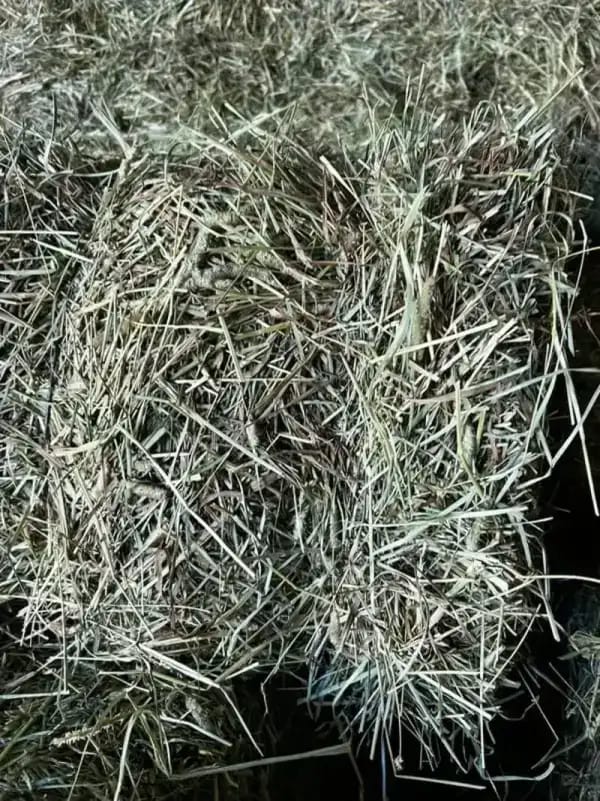
Timothy is the most widely fed horse hay in the country, and for good reason. It is safe, reliable, and nutritionally well-balanced for the majority of adult horses. The protein content sits in a moderate range of 7 to 11 percent, and the calcium-to-phosphorus ratio is excellent at roughly 1.5 to 1. This ratio matters because an imbalanced calcium-to-phosphorus ratio can lead to skeletal problems, especially in growing horses.
Here is something many Florida horse owners do not realize: timothy is a cool-season grass. It cannot grow in Florida's subtropical climate. It thrives in the western United States and Alberta, Canada, which is why every bale of timothy you see in Central FL was shipped here from out of state. All of our hay comes from Nevada, where the high desert, dry climate, and irrigated fields produce nutrient-dense, high-quality Western hay with bright green color and fine stems. Very few feed stores can claim they actually grow the hay they sell, and that is something we take seriously.
Timothy is lower in protein than alfalfa, which makes it the right choice for horses that do not need extra calories. Trail horses, pleasure horses, and horses at maintenance all do well on timothy. It is also lower in sugar than many people think, averaging about 12 percent NSC, though this can range from 7 to 18 percent depending on the cutting and growing conditions. For more about how different cuttings of timothy compare, see our guide: "Understanding Hay Cuttings: 1st vs 2nd vs 3rd Cut."
Alfalfa Hay: The Protein Powerhouse
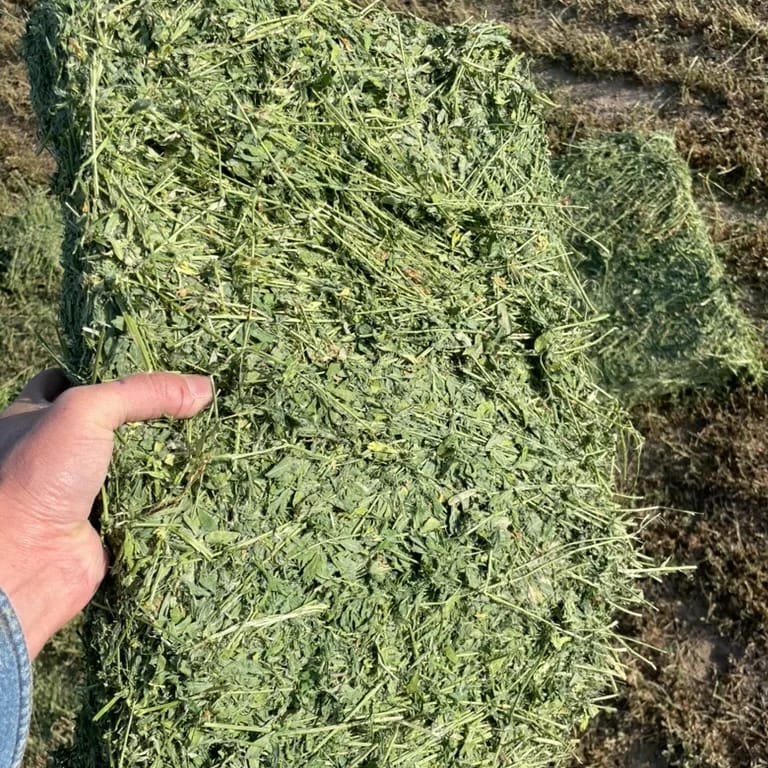
Alfalfa is not a grass at all. It is a legume, and that makes it nutritionally very different from timothy or orchard grass. It has the highest protein of any common horse hay at 15 to 21 percent crude protein, and it contains about three times more calcium than grass hays. The digestible energy is also higher at 0.9 to 1.1 Mcal per pound, making it one of the most calorie-dense forages available.
One thing that surprises people: alfalfa is actually lower in sugar and starch than most grass hays, averaging around 11 percent NSC. The concern with alfalfa is not sugar. It is calories. Alfalfa is calorie-dense, which means it is not the best choice for easy keepers or overweight horses. A horse that maintains weight easily on timothy will likely gain weight on straight alfalfa.
You will hear people say that alfalfa makes horses "hot." Most veterinarians will tell you that the increased energy is caloric, not behavioral in the way people assume. A horse on alfalfa may have more energy because it is consuming more calories, not because alfalfa contains some kind of stimulant. This is one of the most persistent myths in horse feeding.
Alfalfa is best for horses in heavy work, growing foals, lactating mares, and underweight horses that need to put on condition. One caution: the high calcium content can create mineral imbalances if not balanced with adequate phosphorus. A calcium-to-phosphorus ratio that is too skewed can interfere with mineral absorption. Talk to your vet or equine nutritionist if you are feeding straight alfalfa long-term.
Orchard Grass: The Soft, Leafy Favorite
Orchard grass is a cool-season grass that horses tend to love. It has a softer, leafier texture than timothy, and many picky eaters who turn their noses up at other hays will happily eat orchard grass. We hear it all the time from customers: "My horses love your hay. I tried going someplace else and they wouldn't eat your competitor's hay."
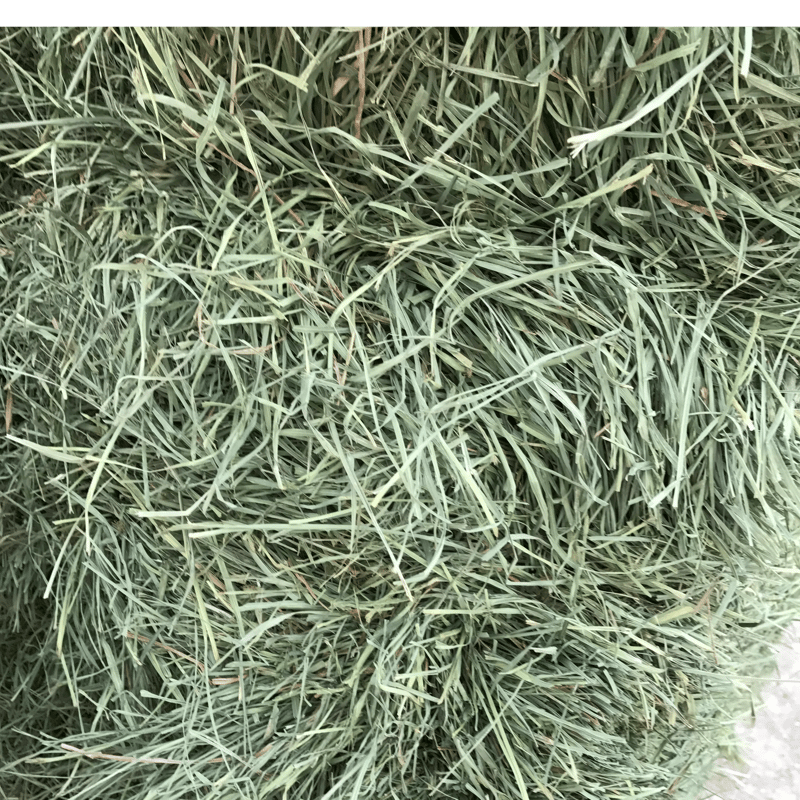
Nutritionally, orchard grass sits slightly above timothy in protein at 10 to 12 percent, and it has higher fiber digestibility, which means more usable calories per pound. The calcium content is about 0.34 percent with phosphorus at 0.23 percent, giving it a healthy 1.5 to 1 ratio. The higher digestibility makes orchard grass a particularly good option for horses that need to maintain or gain weight without the protein levels of alfalfa.
Our Nevada-grown orchard grass ($39.75 per bale) is bright green with minimal brown leaf. The dry climate out West produces hay that cures beautifully, and you can see and smell the difference. Orchard grass is an excellent choice for senior horses who may struggle with coarser hays, and for hard keepers who need every calorie they can get.
Teff Grass: The Metabolic Horse Solution
Teff is a warm-season grass originally from Ethiopia, and it has become the go-to hay for horses with metabolic issues. If a customer tells us their horse has EMS, insulin resistance, or Cushing's disease, teff is the first hay we recommend. "My horse has metabolic issues. What are my options?" is a question we hear regularly, and teff is almost always part of the answer.
The reason is simple: teff is naturally low in non-structural carbohydrates (NSC), typically under 10 percent. NSC ranges from about 5.4 percent at the boot stage to 8.4 percent at late maturity. Because teff is a warm-season grass, it stores carbohydrates as starch rather than fructans, and that matters for metabolic horses because starch is easier for their systems to handle. Fructans, which are found in cool-season grasses, are fermented in the hindgut and can trigger inflammatory responses that lead to laminitis.
Protein is moderate at 11 to 13 percent, similar to timothy, so teff works well as a primary forage. We carry teff grass at $39.00 per bale. One important note: even with teff, NSC can vary depending on harvest timing and growing conditions. If you are managing a metabolic horse, we always recommend getting your hay tested. We can help you understand the results.
For a deeper look at feeding metabolic horses, see our complete guide: "Feeding Guide for Horses with Metabolic Issues."
Peanut Hay: Florida's Own High-Protein Forage
Perennial peanut hay is a warm-season legume grown right here in Florida and across the Southeast. It is one of the few high-quality horse hays that can actually be produced locally, which means fresher product and lower transportation costs.
Protein ranges from 13 to 20 percent, putting it in the same league as alfalfa. Digestibility runs 60 to 70 percent, which is intermediate between alfalfa and bermudagrass. The stems are finer than alfalfa, which many horses prefer. Peanut hay is largely grown for the horse industry in North Florida, South Georgia, and South Alabama, making it a truly regional forage.
For horse owners who want to support local agriculture or who want a high-protein forage without importing from out West, peanut hay ($18.00 per bale) is a strong choice. It also works well as a supplement alongside timothy or orchard grass for added protein variety and dietary enrichment. To understand how peanut hay compares to imported options, see our article: "Canadian vs Nevada vs Florida Hay: What's the Difference?"
Hay Mixes: The Best of Both Worlds
You do not have to pick just one hay type. Blends are popular for good reason, and many experienced horse owners prefer them. A timothy and alfalfa mix is our most popular blend because it balances the moderate protein of timothy with the higher protein and palatability of alfalfa. You get some of the alfalfa benefits without the full calorie and calcium load.
We also carry an orchard and alfalfa mix, which is a higher-calorie blend suited for horses in regular work.
How to Match Hay to Your Horse
The Pleasure Horse or Trail Horse (Light Work)
Timothy, orchard grass, or a timothy and alfalfa mix. Feed at 1.5 to 2 percent of body weight daily. Avoid straight alfalfa unless your horse is underweight. These horses do not need high protein or high calories, and a good grass hay covers their nutritional requirements with room to spare.
The Performance or Sport Horse (Heavy Work)
Alfalfa or an orchard and alfalfa mix. These horses need higher calories and protein to fuel training and competition. You may need to feed at 2 to 2.5 percent of body weight daily. The increased energy density of alfalfa or alfalfa blends supports muscle recovery and sustained energy output.
The Easy Keeper or Overweight Horse
Timothy or teff grass. Feed at 1.5 percent of ideal body weight (not current weight). Use slow feeders to extend eating time and prevent the long fasting periods that can cause metabolic stress. These horses benefit from high-fiber, lower-calorie hay that keeps them chewing without packing on pounds.
The Senior Horse
Soft orchard grass or a timothy and alfalfa mix. Digestibility matters more as gut efficiency declines with age. Senior horses may need higher protein (12 to 14 percent crude protein) to maintain muscle mass. If dental issues are present, soaked hay cubes can help ensure the horse still gets adequate forage intake.
The Metabolic Horse (EMS, IR, Cushing's)
Teff grass or tested-low-NSC timothy. Target NSC under 10 percent. This is a situation where testing your hay is not optional. We have a full article on this topic: "Feeding Guide for Horses with Metabolic Issues."
Growing Foals and Broodmares
Alfalfa or an alfalfa mix. The higher protein and calcium supports growth and lactation. These are the two life stages where the extra nutrition in alfalfa is genuinely needed. Increase a broodmare's intake by 15 to 20 percent during late pregnancy.
What to Look for When Buying Hay
Color: Bright green indicates quality. Yellow or brown hay usually means it was sun-bleached, cut too late, or rained on during curing. Some slight color variation is normal, but overall the bale should look green.
Smell: Good hay has a sweet, fresh smell. If it smells musty, sour, or like ammonia, walk away. A sweet aroma indicates proper curing. "Do you dye your hay? It's always so green!" is something customers say to us regularly, and the answer is no. That bright green color comes from the dry Nevada climate that allows hay to cure quickly without losing its color.
Texture: Look for leafy hay with fine stems. Thick, woody stems mean the hay was cut too late or is over-mature, which reduces nutritional value and palatability.
Dust: Minimal dust is what you want. Excessive dust often means mold spores, which can cause respiratory issues like heaves (recurrent airway obstruction). Break open a flake and check for visible dust clouds.
Weight: Heavier bales (for their size) are denser, but make sure the hay is not too moist. Hay that feels warm or damp can develop mold in storage. Properly cured hay should feel dry to the touch.
Source: Ask where it was grown, what cutting it is, and whether it was rained on during curing. We are always happy to answer these questions because we pride ourselves in our quality of hay and our service. Knowing the source of your hay gives you confidence in what you are feeding.
Why Hay Testing Matters
You cannot determine NSC, protein, or mineral content just by looking at hay. The only way to know exactly what you are feeding is through laboratory analysis. Equi-Analytical Labs offers horse-specific testing starting at $24 with their Fast Track package.
The key values to check are crude protein, ADF (acid detergent fiber), NDF (neutral detergent fiber), ESC (ethanol soluble carbohydrates), starch, calcium, and phosphorus. For metabolic horses, ESC plus starch is the number that matters, and you want it under 10 percent. For general feeding, knowing the protein and fiber content helps you confirm the hay matches your horse's needs.
Do you guys pull hay samples and get it tested? Yes, we do. We monitor the quality of our hay, and we are happy to share what we know about the batches we carry. If you get your own hay analysis done and are not sure how to read it, bring it to us. Our staff can help you understand the results and figure out the right hay for your horse.
Frequently Asked Questions
Can I feed my horse just alfalfa?
You can, but for most adult horses in light work, straight alfalfa provides more protein and calories than they need. It works best for horses in heavy work, growing foals, or underweight horses needing to gain condition. A timothy and alfalfa mix gives you the benefits without the excess. If you do feed straight alfalfa, make sure the overall mineral balance is appropriate.
Is teff hay safe for all horses, or just metabolic horses?
Teff is safe for any horse. It is specifically recommended for metabolic horses because of its naturally low sugar content, but healthy horses do perfectly well on it too. Some owners here in Central Florida prefer it as a general-purpose hay because they know the sugar content is consistently low.
Why is western-grown hay better than locally grown hay for horses?
It is not always "better," but cool-season grasses like timothy and orchard grass simply cannot grow in Florida's subtropical climate. Western states like Nevada and Canada's Alberta have the soil, irrigation, and climate to produce these grasses with consistent quality. Florida does grow excellent warm-season forages like bermudagrass and peanut hay, and those have their place in a feeding program. The choice often comes down to what your horse needs nutritionally.
How do I know if my horse's hay is good quality?
Look for bright green color, a sweet smell, leafy texture with fine stems, and minimal dust. Avoid hay that smells musty, looks brown or yellow throughout, or feels warm to the touch. For exact nutritional data, get a hay analysis done through a lab like Equi-Analytical. Visual inspection tells you a lot, but a lab test tells you everything.
Should I mix hay types?
Many horse owners mix or alternate hay types to provide nutritional variety, and we think it is a smart approach. Some horses have a strong preference for one type, while others do well rotating between hays. Mixing a grass hay like timothy with a legume like alfalfa is a common and effective strategy that provides balanced nutrition.
We are here to help you find the right hay for your horse. Stop by our store at 21091 NE US Hwy 27 in Williston, FL, or give us a call at (352) 528-1255. We are open six days a week and always happy to talk hay. We serve horse owners across Ocala, Gainesville, Summerfield, Newberry, Dunnellon, and all of Central Florida.
From the Williston yard
Questions about the right hay for your horse?
Call Hailey at the Williston store, or browse the catalog and we will get a load on the truck. Hay delivery runs across North Central Florida.