The Best Hay for Hard Keepers: How to Put Weight on a Thin Horse
On this page
- First, Rule Out Why Your Horse Is a Hard Keeper
- The Best Hay for Hard Keepers: More Forage, Richer Forage
- Adding Cool Calories Beyond Hay
- Feeding Management That Helps Thin Horses
- Hay a Hard Keeper Will Actually Clean Up
- Weight-Building Hay, Delivered Across North Central Florida
- Frequently Asked Questions
Written by the team at Farmers Direct Hay and Feed in Williston, Florida. Owners Delmar and Trennis Ropp are fifth-generation farmers who grow their own hay on high-desert Nevada farms, feed horses on that hay themselves, and test their western hay by field on a Fast Track 600 lab panel.
The best hay for hard keepers is high-calorie forage: alfalfa, alfalfa mixes or soft orchard grass, fed in generous amounts alongside cool calories like beet pulp. Before you change feed, rule out teeth, ulcers and parasites with your vet, then feed hay the horse will actually clean up and aim for slow, steady weight gain.
First, Rule Out Why Your Horse Is a Hard Keeper
Before you spend a dollar on richer feed, find out why your horse is a hard keeper, because the fastest weight gain usually comes from fixing an underlying problem rather than from any single bale. A hard keeper is a horse that struggles to hold condition even on a diet that would keep an average horse round, and in our experience the thin horses that turn around slowest are the ones whose owners skipped this step.
Work through the common causes with your vet first:
- Teeth: Sharp points or missing molars mean hay is not ground properly, so calories pass through undigested. Get a dental exam.
- Parasites: A heavy worm burden steals nutrition and damages the gut. Run a fecal egg count.
- Ulcers: Gastric ulcers are common in horses in work and suppress appetite. Ask about an ulcer workup if the picture fits.
- Pain or heavy workload: Chronic pain or hard training simply burns more than the horse takes in.
- Age: Older horses ferment fiber less efficiently, so they need higher-quality forage than they did in their prime.
A horse that is thin because of bad teeth will not fatten on premium alfalfa it cannot chew. Once the medical side is handled, the nutrition plan is simple and forage does most of the heavy lifting. A healthy hard keeper on the right hay usually turns the corner within a few weeks.
The Best Hay for Hard Keepers: More Forage, Richer Forage
The best hay for hard keepers comes down to two levers: how much forage the horse eats, and how calorie-dense that forage is. Grain is not the foundation of weight gain, forage is. Start by making sure the horse has as much good hay as it will eat, since many hard keepers are simply underfed, then raise the energy density of what is in the net.
Legume hay is the workhorse. Alfalfa carries more calories, protein and calcium per pound than grass hay, which makes it ideal for adding condition. Our premium alfalfa small bales run $35 and the ultra premium alfalfa is $38. If you would rather not feed straight alfalfa, an orchard alfalfa blend is a gentler step up that raises calories and protein over plain grass hay while staying easy to feed.
Among grass hays, soft orchard grass at $39.75 is our pick for thin horses because it is palatable and highly digestible, and a leafy timothy 2nd cut at $40.50 is another calorie-friendly, well-liked option. A common, effective plan is a grass hay base with a few pounds of alfalfa added daily, which lifts calories and protein without tipping an easy-going hard keeper into an over-rich diet.
Not sure how many pounds to feed? Our guide to how much hay your horse needs by weight walks through sizing daily forage to your horse's weight and goals. Introduce any richer hay gradually over a week or two so the hindgut adjusts.
Adding Cool Calories Beyond Hay
When all the forage a horse will eat still is not enough, add calories in forms that are safe for the equine gut. Reach for cool calories, meaning energy from fiber and fat rather than a big load of sugar and starch, which can drive hot behavior, digestive upset and laminitis risk.
The dependable options are:
- Beet pulp: a highly digestible fiber that soaks into a soft mash, adds real calories and is gentle on the hindgut. It also suits older hard keepers with dental issues, since they do not have to chew it.
- Soaked hay cubes and pellets: similar to beet pulp, and can partly replace long-stem hay for a horse that cannot chew well.
- Added fat: vegetable oil, rice bran or a high-fat supplement is calorie-dense and starch-free, which is why so many weight-gain feeds lean on it.
We stock beet pulp, hay cubes and pellets, and condition feeds from brands like Blue Seal, Hallway, Kentucky Equine Research and Total Equine, and can help you match one to your horse. Two cautions: introduce any new feed slowly, and if your hard keeper is also insulin resistant or laminitis prone, keep the added calories fiber- and fat-based and lean on a lab-tested, low-sugar hay rather than grain. When weight and metabolic worries collide, loop in your vet.
Feeding Management That Helps Thin Horses
How you feed a thin horse can matter as much as what you feed. Horses evolved to graze almost continuously, and long stretches with an empty stomach both waste the natural benefit of forage and raise ulcer risk, which makes a hard keeper harder to keep.
Keep forage in front of the horse as close to free choice as its metabolism safely allows, and split any concentrate into several small meals instead of one or two large ones, since the equine gut handles frequent small amounts far better.
Watch herd dynamics. A timid horse often loses weight simply from being driven off the hay by a dominant one. Feeding thin horses separately, or setting out more piles or nets than there are horses, solves a surprising number of weight problems. A slow-feed net can stretch forage across more hours for a horse that bolts its hay, though for a true hard keeper you usually want to slow intake, not restrict it.
Track progress with body condition scoring rather than your eye alone. Aim for a moderate score around 5 to 6 out of 9, and give any change several weeks. Healthy weight gain is slow, and steady beats dramatic every time.
Hay a Hard Keeper Will Actually Clean Up
For a horse that struggles to hold weight, the best hay is the one that goes into the horse, not onto the stall floor. Palatability and quality are not extras here, they are the whole point. Coarse, stemmy, over-mature hay gets sorted and wasted, so the horse eats fewer calories than the bale weight suggests, and the cheapest hay often turns out to be the most expensive once you count what gets trampled and tossed.
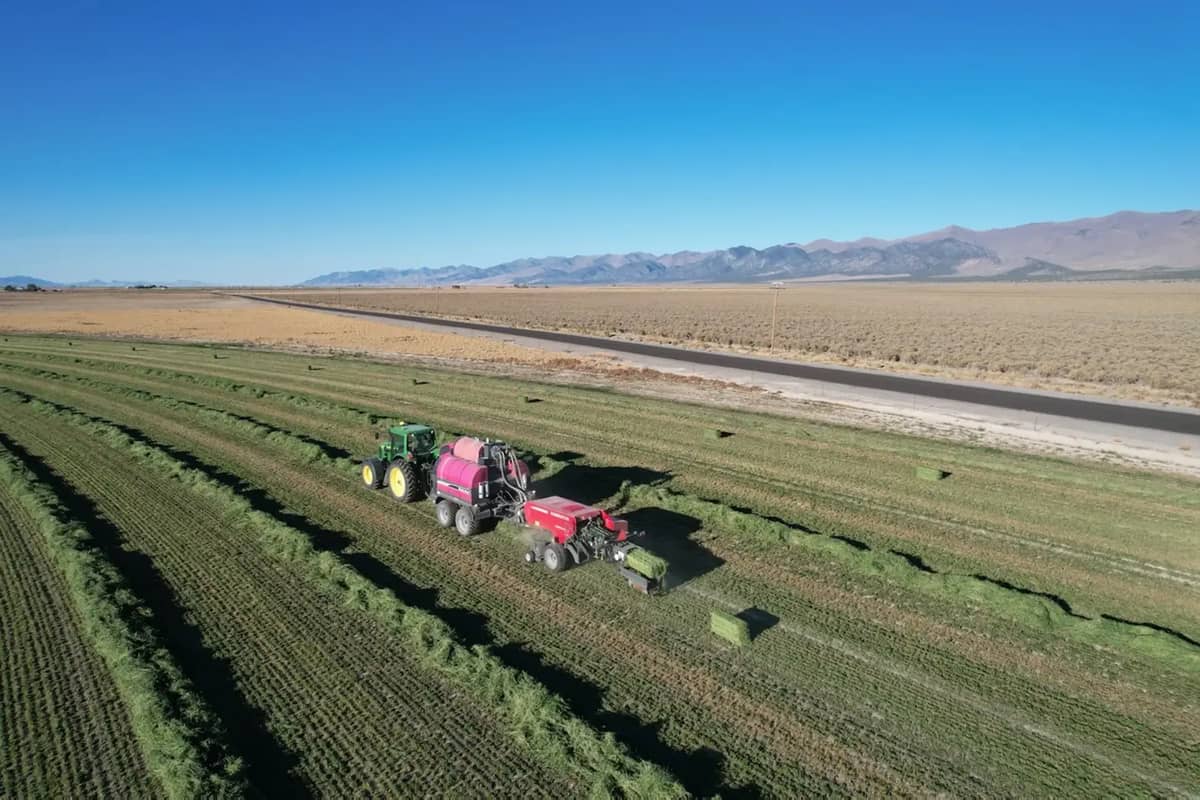
Soft, leafy, fresh hay gets cleaned up, and every pound eaten is a pound working for you. We grow most of our grass and alfalfa on our own Nevada high-desert farms, cut for quality rather than maximum tonnage, and hand-select each lot for leaf-to-stem ratio, so the hay is palatable enough for a picky hard keeper to finish.
We test the field, not each bale, on a Fast Track 600 lab panel showing protein, NSC, ESC and starch, so you can confirm you are actually buying the calorie and protein density you are paying for rather than guessing. And if a bale ever arrives coarser or off, bring it back for an exchange.
Getting weight on a thin horse is a patience game, and it goes faster when the hay in the net is hay the horse wants to eat. If you are weighing alfalfa but worry it will fizz your horse up, our post on whether alfalfa makes horses hot explains why its energy comes mostly from protein and fiber, not sugar.
Weight-Building Hay, Delivered Across North Central Florida
Putting weight on a horse means feeding a lot of forage, and hauling it is a chore, so we deliver. Our flat per-trip rates are $35 within 25 miles of the Williston store, reaching Ocala, Dunnellon, Newberry and Chiefland, and $40 from 25 to 40 miles for Alachua, Summerfield and nearby towns. Container-load orders deliver free within 40 miles. See our hay delivery zones and rates for the full picture, and note there is no minimum order within 40 miles, so you can start with a couple of bales of alfalfa or a blend to see how your hard keeper takes to it before ordering more.
Orders placed by 3 p.m. Eastern typically arrive in 2 to 3 business days. If you would rather feel the hay and judge softness yourself, the Williston store is open Monday through Friday 9 to 5:30 and Saturday 9 to 2:30.
We are fifth-generation farmers who feed horses on this hay ourselves, and we would rather swap a bale than watch a thin horse turn up its nose. Come get the forage that finally puts the weight on.
Frequently Asked Questions
What is the best hay for a hard keeper?
The best hay for a hard keeper is usually alfalfa, because it packs more calories, protein and calcium per pound than grass hay. A grass and alfalfa mix, or a soft grass hay like orchard grass, works well too. Whatever you choose, feed plenty of it and pick hay the horse will actually clean up.
How much alfalfa should I feed a hard keeper?
Many owners feed a grass hay base with a few pounds of alfalfa added daily rather than switching to all alfalfa, which lifts calories and protein while keeping the diet balanced. Introduce it gradually over one to two weeks, and set exact amounts by your horse's body weight with help from your vet or a nutritionist.
Will alfalfa make my hard keeper hot?
Alfalfa's extra energy comes largely from protein and digestible fiber, not from a big sugar and starch load, so it does not make most horses hot. If your horse does get fizzy, look first at total calories and workload rather than blaming the alfalfa itself.
What can I add besides hay to help a thin horse gain weight?
Cool-calorie sources like beet pulp, soaked hay cubes or pellets, and added fat from oil or rice bran build condition without a big starch load. Rule out teeth, ulcers and parasites with your vet first, then layer these on top of generous, good-quality forage.
How long does it take to put weight on a hard keeper?
Plan on weeks, not days. Healthy weight gain is gradual, so give any change several weeks and track progress with body condition scoring, aiming for around 5 to 6 out of 9. If a thin horse is not responding, revisit the medical workup with your vet.
From the Williston yard
Questions about the right hay for your horse?
Call Hailey at the Williston store, or browse the catalog and we will get a load on the truck. Hay delivery runs across North Central Florida.