Used vs One-Trip Shipping Container: Which Should You Buy?
On this page
- Used vs One-Trip Shipping Container: The Short Answer
- What Is a One-Trip Shipping Container?
- What Is a Used Shipping Container?
- Used vs One-Trip Side by Side
- How Much Does a 20-Foot Shipping Container Cost?
- Which One Is Better for Hay Storage?
- 20-Foot Container Size: What Fits Inside
- What to Check Before You Buy Either Type
- Buying a Shipping Container Near Ocala and Williston, FL
- Another Option: Hay Delivered by the Container
- FAQ
A wind and water tight used container handles hay and other plain storage well, while a one-trip box suits visible spots and modifications and lasts longest. At our Williston yard that is $2,000 for used or $3,800 for one-trip, plus tax. Buyers who mainly need hay storage can skip owning a box and have hay delivered inside a container instead.
Used vs One-Trip Shipping Container: The Short Answer
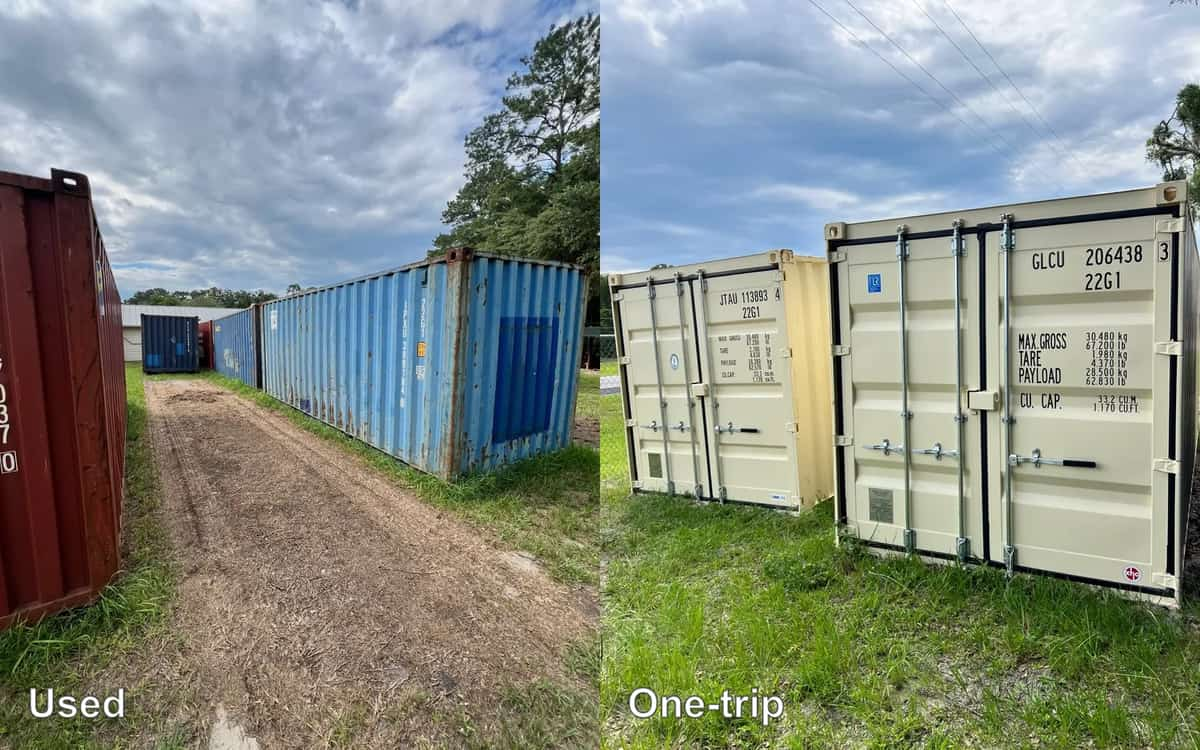
A one-trip shipping container made a single ocean voyage, so it is near new. Next to a used unit, it usually has cleaner paint, better door seals and fewer dents.
A used shipping container has years of cargo service and shows cosmetic wear, but a good one is still wind and water tight. At our Williston yard, a used 20 ft container is $2,000 and a one-trip unit is $3,800, plus tax.
For plain storage, like hay behind the barn, a used container is usually enough. If looks, modifications or the longest service life matter to you, go with one-trip.
The grades, prices and measurements below all refer to the 20 ft size, which is the size we sell.
What Is a One-Trip Shipping Container?
A one-trip container has typically made one cargo trip from the factory before being sold. That trip usually runs from a factory in Asia to a US port. From there the box goes to the resale market instead of back into ocean freight.
One loaded voyage still leaves some wear. One-trip containers may show minor handling marks, forklift marks or scuffs from that trip.
They usually have less rust than used units. A light scrape or two is normal on any box that has been lifted on and off a ship.
Some listings call these boxes new shipping containers, since a one-trip unit has typically seen minimal wear. Before you pay, ask the seller what "new" means on that listing and get the answer in writing.
What Is a Used Shipping Container?
Used containers have usually made many trips and may be near the end of their shipping life. They may show dents, scuffs, surface rust or original markings.
A box retired from ocean freight can still keep hay, tools or feed dry for years when the steel, roof and floor are sound. The grade on a used unit tells you more than its paint does.
We sell our used units wind and water tight, with no holes. If a unit has a hole, we tell you up front and it sells for less.
Cargo Worthy vs Wind and Water Tight
Used containers are graded wind and water tight (WWT), cargo worthy (CW) or multi-trip. Sellers also list an as-is grade, the cheapest of the used grades. Here is what each grade means in plain words:
- Cargo worthy (CW): sound enough to carry freight by sea again.
- Wind and water tight (WWT): no holes and no leaks, so rain and wind stay out.
- Multi-trip: a few voyages behind it, a step below one-trip and above most used grades.
- As-is: sold with whatever damage it has, which can include holes or a bad floor. Our used units are not this grade: we sell them wind and water tight.
For storage, wind and water tight is the grade that counts. Cargo worthy adds an ocean shipping standard that a box parked beside your barn never needs.
Used vs One-Trip Side by Side
Here is how the two types compare on condition and the jobs they suit.
- Feature: Paint. One-trip: Cleaner paint. Used: Scuffs and original markings possible
- Feature: Rust. One-trip: Less rust. Used: Surface rust possible
- Feature: Dents. One-trip: Fewer dents. Used: Dents possible
- Feature: Door seals. One-trip: Better door seals. Used: Check before you buy
- Feature: Container floor. One-trip: Little wear. Used: Check for soft spots
- Feature: Curb appeal. One-trip: Close to new. Used: Looks its age
- Feature: Best uses. One-trip: Visible sites, offices, farm stands, custom builds. Used: Budget storage, equipment, construction sites, agriculture
If you plan to cut in a window or a walk-through door, start with one-trip. Dents and rust on a used unit make cutting and framing an opening harder.
Condition and Appearance
A one-trip unit has the curb appeal for spots people see, such as near the house, along the road or at a farm stand where customers park.
Cosmetic wear on a used unit means faded paint and dents. It says nothing about whether the roof leaks or the doors seal.
If the container will sit out of sight behind a barn or shop, looks matter less than seals, roof and floor. In that spot, the extra money for one-trip mostly buys looks and extra years, and it could go toward vents, pallets or hay instead.
Lifespan and Long-Term Value
A one-trip container usually has a longer expected service life than a used one. A properly graded used container is still structurally sound and suits most storage projects.
How long a used container lasts depends more on its condition when you buy and the care it gets than on how many trips it made. Start with a solid container floor, good door seals and no holes.
After that, routine care keeps it going. Wire-brush and paint surface rust spots before they spread, clear leaves and standing water off the roof, and keep the door hinges and locking bars greased.
How Much Does a 20-Foot Shipping Container Cost?
Prices for 20 ft units vary by grade and market, so compare the same grade when you shop. When you compare quotes, compare the same grade: our used units are sold wind and water tight, so hold our $2,000 used price, plus tax, against other sellers' wind and water tight units, not their as-is boxes.
Farmers Direct Hay and Feed sells containers outright to customers. Once it is paid for, the box is yours to keep, move or modify.
Delivery and Pickup Costs
Delivery is $150 within 25 miles of Williston. Farther than that, call and we quote it. Pickup from our yard is free.
We bring it out and set it on your spot. We confirm stock and delivery with you first, then take payment.
Do You Need Level Ground for a Container?
You need a clear, level spot with room for our truck to get in. Walk the route before delivery day and look for low branches, soft ground, tight gates and fence corners.
Level ground keeps the cargo doors swinging and sealing square, since a twisted box can leave gaps at the door seals. Some owners set the corners on blocks or a gravel pad to keep the container floor up off wet ground.
Placement rules vary, so check with your county before the box arrives.
Which One Is Better for Hay Storage?
A shipping container makes solid hay storage. A 20 ft container holds roughly 130 bales of hay. The steel walls are rain-tight and keep pests out.
In Florida the most common way good hay goes bad is storage, as heat and humidity under a tarp or in a closed room trap moisture and grow mold fast. A shut container is a closed room too, which is why the vents below matter.
For hay, a wind and water tight used unit does the job. The roof, door seals and floor protect your bales, and a used box with sound ones protects them as well as a one-trip box.
Pay the extra for one-trip if the box will sit near the house or you plan bigger modifications than adding vents. If you plan to fill it a full load at a time, our guide to buying hay by the container load walks through ordering that way.
Keeping Hay Cool and Dry Inside a Container
In a Florida summer it gets hot inside, so add basic vents or a small fan for long-term hay storage. Ventilation lets hot, damp air out from under the steel roof before it settles into the stack.
Condensation is the other thing to watch. Warm, humid air meets steel that cools overnight, water beads on the ceiling and walls, and it drips onto whatever sits below.
Stack bales on pallets instead of the bare floor, and leave a gap between the stack and the walls so air can move. On dry, breezy days, open the cargo doors for a few hours to air it out.
Dusty hay is often a storage problem, so if your bales come out dusty, check airflow and stacking first. If a bale from us is moldy or dusty, bring it back and we will exchange it.
20-Foot Container Size: What Fits Inside
Outside, the box is 20 ft long, 8 ft wide and 8 ft 6 in high. The inside dimensions are approximately 19 ft 4 in long, 7 ft 8 in wide and 7 ft 10 in high.
The door opening is approximately 7 ft 8 in wide and 7 ft 5 in high. Lockable cargo doors sit on one end, and the box is rain-tight Corten steel.
Measure mowers, tractors or loaded pallets against the door opening, not the inside length. Height is the tighter number, since the door opening sits lower than the inside ceiling.
The doors swing out from the end, so leave clear ground in front of them when you pick the spot.
What to Check Before You Buy Either Type
Walk the unit yourself before you pay, whichever type you buy. Work through it in this order:
- Step inside, have someone close the doors, and look for daylight through holes or gaps.
- Open and close both cargo doors, and work the locking bars.
- Run a hand along the door seals and look for cracks, tears or flattened sections.
- Look over the roof for rust-through and dents that hold water.
- Walk the container floor and feel for soft or spongy spots.
Surface rust, dents and forklift marks are cosmetic. Holes, rust-through and soft flooring are real problems that cost money to fix.
In Williston, come by during store hours and pick out the exact unit you want.
Buying a Shipping Container Near Ocala and Williston, FL
The containers sit in our yard at 21091 NE US Hwy 27, Williston. That puts us about 22 miles west of Ocala.
Hours are Monday to Friday 9am to 5:30pm and Saturday 9am to 2:30pm, closed Sunday. If you are driving in from Gainesville or elsewhere in Central Florida, call (352) 528-1255 first to check stock.
Another Option: Hay Delivered by the Container
If the main reason you want a container is hay storage, you may not need to buy one. Order hay by the 20 ft container, roughly 130 bales, and we deliver it free up to 40 road miles of Williston.
The hay comes packed inside the container. That turns the box into on-site storage that comes with your hay order.
When the bales run low, call us and we bring a full container and take the empty one back. Our hay by the container page covers the details.
The first 30 days of on-site storage are free, then $25 a week if you keep it longer. Most customers swap the empty for a full one before the 30 days are up.
If you would rather own the box outright, browse our used and one-trip shipping containers, then come pick yours out at the Williston yard or call (352) 528-1255.
FAQ
Can I See a Container Before I Buy It?
Yes. The containers sit in our yard at 21091 NE US Hwy 27, Williston. Come by during store hours and pick out the exact unit you want, or call (352) 528-1255 first.
Do You Deliver Shipping Containers to Ocala?
Yes. Our Williston yard is about 22 miles west of Ocala. Delivery is $150 within 25 miles of the yard, and we quote anything farther on the phone. Call (352) 528-1255 with your address and we will confirm the price.
Will Hay Go Bad if I Store It in a Container?
Not if it gets air. The container keeps out rain and pests. In a Florida summer it gets hot inside, so add basic vents or a small fan for long-term hay storage, and stack bales on pallets with a gap at the walls.
What Can I Store in a Shipping Container?
Anything you want kept dry and locked: equipment, tools, feed, hay or shop overflow. A 20-foot container holds roughly 130 bales of hay.
Do I Need a Permit for a Shipping Container?
Placement rules vary by county, so check with yours before the container arrives.
Ready to pick one out? See our used and one-trip containers, come by the Williston yard at 21091 NE US Hwy 27, or call (352) 528-1255.
From the Williston yard
Questions about the right hay for your horse?
Call Hailey at the Williston store, or browse the catalog and we will get a load on the truck. Hay delivery runs across North Central Florida.